Water Filter, Vessel, Softner, Accessory
Sodium Dichloroisocyanurate Dehydrate
- Part number
- RXSOL-32-3021-025
- Brand
- RXSOL
Overview
Sodium dichloroisocyanurate is the sodium salt of a chlorinated hydroxytriazine and is used as a source of free available chlorine, in the form of hypochlorous acid, for the disinfection of water. It is widely used as a stable source of chlorine for the disinfection of swimming pools and in the food industry.
Applications
Sodium dichloroisocyanurate is a chemical compound widely used as a cleansing agent and disinfectant. It is a colorless, water-soluble solid, produced as a result of reaction of cyanuric acid with chlorine. The dihydrate is also known as is the potassium salt.
Dosage and directions
Sodium dichloroisocyanurate possible to use as a disinfectant for drinking-water in emergency situations, and for routine use in some water supplies.
Characteristics and notes
Sodium Dichloro-Isocyanate can affect you when breathed in.
Sodium Dichloro-Isocyanate can irritate the skin.
Contact can irritate and burn the eyes.
Breathing Sodium Dichloro-Isocyanate can irritate the nose and throat causing coughing and wheezing.
Safety and SDS
Read the safety data sheet before handling. Wear suitable gloves and eye protection.
View safety data sheet
| Product Name | SODIUM DI CHLOROISOCYANURATE DIHYDRATE |
| Part Number | RXSOL-60-6605-495 |
Company Details:
RX MARINE INTERNATIONAL
105, A wing , BSEL , TECH PARK.
VASHI ,NEW BOMBAY 400703 INDIA
Branch : Kandla, Mumbai , Chennai, Vizag, Kolkata, UAE , OMAN , CANADA and KENYA
| Phone | +91 22 20871200 - 1400 |
| Fax | +91 22 27612100 :::AOH :0091 9821214367 |
| rxsolchemicals@gmail.com | |
| Website | www.rxmraine.com |
| Chemical Name | CAS | EC number | Weight | Moleculer Formula |
| SODIUM DI CHLOROISOCYANURATE | 2893-78-9 | 220-767-7 | 219,95 g/mol | C3CI2N3NaO3 |
| Signal Word | Danger |
| Classification of the substance or mixture | Classification according to Regulation (EC) No 1272/2008 Oxidizing solids (Category 2), H272 Acute toxicity, Oral (Category 4), H302 Skin corrosion (Sub-category 1B), H314 Serious eye damage (Category 1), H318 Specific target organ toxicity - single exposure (Category 3), Respiratory system, H335 Short-term (acute) aquatic hazard (Category 1), H400 Long-term (chronic) aquatic hazard (Category 1), H410 For the full text of the H-Statements mentioned in this Section, see Section 16. |
| Hazard Statements |
H272 May intensify fire; oxidizer.
H302 Harmful if swallowed.
H314 Causes severe skin burns and eye damage.
H335 May cause respiratory irritation.
H410 Very toxic to aquatic life with long lasting effects.
|
| P280 Wear protective gloves.P305 + P351 + P338 | Wear protective gloves/ protective clothing/ eye protection/ face protection.F IN EYES: Rinse cautiously with water for several minutes. Remove contact lenses, if present and easy to do. Continue rinsing. |
| Supplemental Hazard information |
EUH031 Contact with acids liberates toxic gas.
EUH044 Risk of explosion if heated under confinement
|
| Precautionary statement(s) |
P210 Keep away from heat, hot surfaces, sparks, open flames and other ignition sources. No smoking.
P260 Do not breathe dusts or mists.
P273 Avoid release to the environment.
P280 Wear protective gloves/ protective clothing/ eye protection/ face protection.
P303 + P361 + P353 IF ON SKIN (or hair): Take off immediately all contaminated
clothing. Rinse skin with water.
P305 + P351 + P338 IF IN EYES: Rinse cautiously with water for several minutes.
Remove contact lenses, if present and easy to do. Continue
rinsing.
|
| Other hazards |
This substance/mixture contains no components considered to be either persistent,
bioaccumulative and toxic (PBT), or very persistent and very bioaccumulative (vPvB) at levels of 0.1% or higher. Lachrymator., Sternutator.
|
| Description of first-aid measures | No data available |
| Most important symptoms and effects, both acute and delaye | The most important known symptoms and effects are described in the labelling (see section 2.2) and/or in section 11 |
| Indication of any immediate medical attention and special treatment needed | No data available |
| extinguishing media | No data available |
| Special hazards arising from the substance or mixture |
Carbon oxides
Nitrogen oxides (NOx)
Hydrogen chloride gas
Sodium oxides
Combustible.
Avoid shock and friction.
In the event of decomposition: danger of explosion!
|
| Further information | No data available |
| Advice for firefighters | No data available |
| Personal precautions, protective equipment and emergency procedures | For personal protection see section 8. |
| Enviromental Precaution | No data available |
| Methods and materials for containment and cleaning up | .Sweep up and shovel. Do not flush with water. Keep in suitable, closed containers for disposal. |
| Reference to other sections | For disposal see section 13. |
| Precautions for safe handling | For precautions see section 2.2. |
| Conditions for safe storage, including any incompatibilities | Moisture sensitive |
| Storage class | Storage class (TRGS 510): 4.1A: Other explosive hazardous materials |
| Specific end use(s) | Apart from the uses mentioned in section 1.2 no other specific uses are stipulated |
Control parameters
| Control parameters | Ingredients with workplace control parameters |
| Exposure controls | No data available |
| Physical state | Powder |
| Colour | White |
| Odour | Chlorine |
| Odor Threshold | Not Applicable |
| pH | 6,2 - 6,8 at 10 g/l at 25 °C |
| Melting Point | No data available |
| Boiling Point | No data available. |
| Flash Point | No data available |
| Evaporation Rate | Not Applicable |
| Flammability (solid, gas) | The product is not flammable. - Flammability (solids) |
| Explosive properties |
May mass explode in fire.Risk of explosion if heated under
confinement
|
| Upper/lower flammability or explosive limits | No data available |
| Autoignition temperature | No data available |
| Decomposition temperature | 240 °C |
| Vapour pressure | < 0,000 hPa at 20 °C |
| Density | 1,97 g/cm3 at 25 °C |
| Vapour Density | No Data Available |
| Specific Gravity | No data available |
| Partition coefficient | No data available |
| Explosive properties |
May mass explode in fire.Risk of explosion if heated under
confinement.
|
| Solubility | 236,8 g/l at 25 °C - US-EPA- completely soluble |
| Particle characteristics | No data available |
| Oxidizing properties |
The substance or mixture is classified as oxidizing with the
category 2.
|
| Other safety information | No data available |
| Reactivity | No data available |
| Stability | No data available |
| Possibility of hazardous reactions | No data available |
| Conditions to avoid | Strong heating. |
| Incompatible materials | Strong bases, Strong oxidizing agents |
| Hazardous Polymerization | In the event of fire: see section 5 |
| Acute toxicity |
LD50 Oral - Rat - male and female - 1.823 mg/kg (US-EPA) Remarks: (in analogy to similar products) The value is given in analogy to the following substances: troclosene sodium, dihydrate Acute toxicity estimate Oral - 1.823 mg/kg (Calculation method)
LC50 Inhalation - Rat - male and female - 4 h - 0,27 - 1,17 mg/l - dust/mist (OECD Test Guideline 403) LD50 Dermal - Rat - male and female - > 5.000 mg/kg (US-EPA)
|
| Skin corrosion/irritation |
Skin - Rabbit
Result: Causes severe burns. - 24 h
(US-EPA)
|
| Serious eye damage/eye irritation |
Eyes - Rabbit
Result: Causes serious eye damage.
(US-EPA)
|
| Respiratory or skin sensitization |
Maximization Test - Guinea pig
Result: negative
(OECD Test Guideline 406)
|
| Germ cell mutagenicity |
Test Type: Ames test Test system: Escherichia coli/Salmonella typhimurium Metabolic activation: with and without metabolic activation Method: OECD Test Guideline 471 Result: negative Test Type: sister chromatid exchange assayTest system: Chinese hamster ovary cells Metabolic activation: with and without metabolic activation Method: Regulation (EC) No. 440/2008, Annex, B.19 Result: negative Test Type: In vitro mammalian cell gene mutation test Test system: mouse lymphoma cells Metabolic activation: with and without metabolic activation Method: Regulation (EC) No. 440/2008, Annex, B.17 Result: negative Test Type: Mutagenicity (mammal cell test): chromosome aberration. Species: Rat Cell type: Bone marrow Application Route: Oral Method: OECD Test Guideline 475
Result: negative
|
| Reproductive toxicity | No data available |
| Specific target organ toxicity - single exposure | Inhalation - May cause respiratory irritation. |
| Additional Information | Endocrine disrupting properties |
| Endocrine disrupting properties |
The substance/mixture does not contain components considered to have endocrine disrupting properties according to REACH Article 57(f) or Commission Delegated regulation (EU) 2017/2100 or Commission Regulation (EU) 2018/605 at levels of 0.1% or higher. Repeated dose toxicity - Mouse - female - Oral - 104 Weeks - NOAEL (No observed adverse effect level) - 1.523 mg/kg Repeated dose toxicity - Rat - male and female - inhalation (dust/mist/fume) - 4 Weeks Remarks: (in analogy to similar products)
(ECHA) The value is given in analogy to the following substances: symclosene
RTECS: XZ1900000 Material is extremely destructive to tissue of the mucous membranes and upper respiratory tract, eyes, and skin., Cough, Shortness of breath, Headache, Nausea To the best of our knowledge, the chemical, physical, and toxicological properties have not been thoroughly investigated.
|
| Persistence and degradability | Biodegradability aerobic - Exposure time 8 h Result: 100 % - Readily biodegradable. Remarks: (ECHA) |
| Toxicity |
Toxicity to fish static test LC50 - Menidia beryllina (Inland silverside) - 8.000 mg/l -96 h (US-EPA) Toxicity to daphnia and other aquatic invertebrates static test EC50 - Daphnia magna (Water flea) - > 1.000 mg/l - 48 h Remarks: (ECHA) Toxicity to algae static test ErC50 - Skeletonema costatum - > 100 mg/l - 72 h
(ISO 10253) Toxicity to bacteria EC50 - activated sludge - > 4.500 mg/l - 3 h
(OECD Test Guideline 209)Toxicity to fish(Chronic toxicity) semi-static test NOEC - Oncorhynchus mykiss (rainbow trout) - 1.000 mg/l - 28 d (OECD Test Guideline 215) Toxicity to daphnia and other aquatic invertebrates(Chronic toxicity) static test EC50 - Daphnia magna (Water flea) - 2.600 mg/l - 21 d
(OECD Test Guideline 211)
|
| Bioaccumulative potential | No data available |
| Toxicity to fish | static test LC50 - Menidia beryllina (Inland silverside) - 8.000 mg/l - 96 h (US-EPA) |
| Toxicity to daphnia and other aquatic invertebrates | static test EC50 - Daphnia magna (Water flea) - > 1.000 mg/l - 48 h Remarks: (ECHA) |
| Toxicity to algae | static test ErC50 - Skeletonema costatum - > 100 mg/l - 72 h (ISO 10253) |
| Toxicity to bacteria | EC50 - activated sludge - > 4.500 mg/l - 3 h (OECD Test Guideline 209) |
|
Toxicity to
fish(Chronic toxicity
|
semi-static test NOEC - Oncorhynchus mykiss (rainbow trout) - 1.000 mg/l - 28 d (OECD Test Guideline 215) |
|
Toxicity to daphnia
and other aquatic
invertebrates(Chronic
toxicity
|
static test EC50 - Daphnia magna (Water flea) - 2.600 mg/l - 21 d (OECD Test Guideline 211) |
| Mobility in soil | No Information available |
| Results of PBT and vPvB assessment | This substance/mixture contains no components considered to be either persistent, bioaccumulative and toxic (PBT), or very persistent and very bioaccumulative (vPvB) at levels of 0.1% or higher. |
| Endocrine disrupting properties | The substance/mixture does not contain components considered to have endocrine disrupting properties according to REACH Article 57(f) or Commission Delegated regulation (EU) 2017/2100 or Commission Regulation (EU) 2018/605 at levels of 0.1% or higher. |
| Other adverse effects | No data available |
| Waste treatment MethodNo data available |
| UN number |
ADR/RID: 2465 IMDG: 2465 IATA: 2465 |
| UN proper shipping name |
ADR/RID: DICHLOROISOCYANURIC ACID SALTS
IMDG: DICHLOROISOCYANURIC ACID, SALTS
IATA: Dichloroisocyanuric acid, salts
|
| Transport hazard class(es) |
ADR/RID: 5.1 IMDG: 5.1 IATA: 5.1 |
| Packaging group |
ADR/RID: II IMDG: II IATA: II |
| Environmental hazards |
ADR/RID: yes IMDG Marine pollutant: yes IATA: no |
| Special precautions for user | Tunnel restriction code : (E) |
| Further information | No data available |
| Safety, health and environmental regulations/legislation specific for the substance or mixture | This material safety data sheet complies with the requirements of Regulation (EC) No. 1907/2006. |
| National legislation | Seveso III: Directive 2012/18/EU of the European : OXIDISING LIQUIDS AND SOLIDS Parliament and of the Council on the control of major-accident hazards involving dangerous substances. : ENVIRONMENTAL HAZARDS |
| Chemical Safety Assessment | For this product a chemical safety assessment was not carried out |
| Other Information |
The information above is believed to be accurate and represents the best information currently available to us. However, we make no warranty of merchantability or any other warranty, express or implied, with respect to such information, and weassume no liability resulting from its use. Users should make their own investigations to determine the suitability of the information for their particular purposes. In no event shall be liable for any claims, losses, or damages of any third party or for lost profits or any special, indirect, incidental, consequential or exemplary damages, howsoever arising, even if RX Marine International has been advised of the possibility of such damages. DISCLAIMER OF LIABILITY :The information in this SDS was obtained from sources which we believe are reliable. However, the information is provided without any warranty, express or implied, regarding its correctness. The conditions or methods of handling, storage, use or disposal of the product are beyond our control and may be beyond our knowledge. For this and other reasons, we do not assume responsibility and expressly disclaim liability for loss, damage or expense arising out of or in any way connected with the handling, storage, use or disposal of the product. This MSDS was prepared and is to be used only for this product. If the product is used as a component in another product, this MSDS information may not be applicable. |
Availability
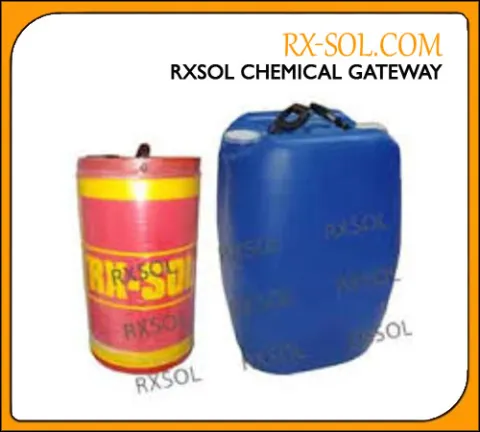
SODIUM DI CHLOROISOCYANURATE is available in small packing as well as in bulk. Buy premium quality SODIUM DI CHLOROISOCYANURATE and other lab chemicals from one of the most trusted brands.