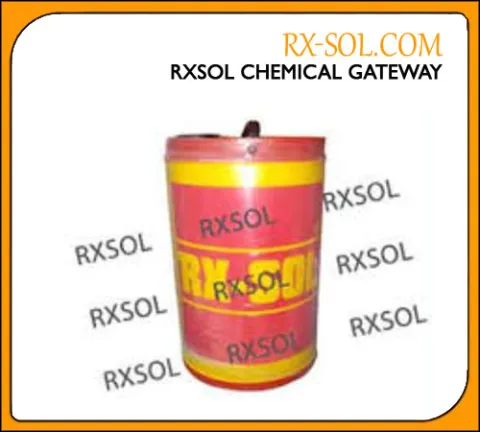
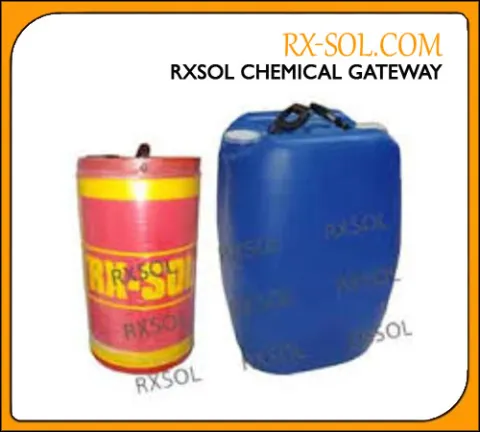
Mono Ethanol Amine MEA
- Part number
- RXSOL-19-1582-210
- Category
- Detergent & Soap
- Brand
- RXSOL
Overview
Monoethanolamine Mea supplier and stockist. MEA is A clear, water-white, hygroscopic liquid with a mild ammoniacal odor.
RXSOL brand MEA iron and chloride free grade and Purity wise doen't contains <= 1 ppm chloride, <= 0.5% pm iron. Absolutely free from impurities makes PURE MEA to absorbe more CO2. On the other hand Purity of MEA optimizing CO2 absorption properties.
MSDS and Technical Product data sheet available directly online...
Technical specifications
Specification Limits
| Min. Max. |
ASTM D-1078
| FREEZING POINT | 10 - 11 DEG.C |
|---|---|
| SOLUBILITY IN WATER | 100 % - WATER, WT % : 0.3 MAX |
| MOLECULAR WEIGHT | 1 - 62.5 g/mol |
Applications
MEA is usfull products fo Gas-scrubbing agent for the absorption and removal of H2S and CO2 ( Acidic Odor ), And MEA have large field of application as detergent, Fabric Softner, Wood Treating agent etc..
BIODEGRADABILITY AND ENVIRONMENTAL SAFETY Monoethanolamine undergoes moderate biodegradation and is not expected to be persistent in the environment.
RXSOL Monoethanolamine (MEA) is a colorless, hygroscopic and moderately viscous liquid with a mild ammoniacal odor. It is used as a chemical intermediate in the manufacture of cosmetics, surfaceactive agents, emulsifiers, plasticizing agents, rubber vulcanization accelerators, antibiotics and pharmaceuticals. MEA also acts as a gas-scrubbing agent for absorption and removal of H2S and CO2.
Uses of Amines enhance strength in cement and reduce drying time.
Ethanolamines are used in heavy-duty liquid laundry detergents, providing a reserve alkalinity to the laundry bath, essential to efficient cleaning. Thealkanolamines neutralize fatty acids present in oily soil components converting them to amine soaps and are effective soil anti-deposition agents.
Ethylenediamine (EDA) is used in fungicides for prevention of mildew, scab, rust and blight.
Monoethanolamine (MEA) is used as a pH control agent in the formulation of packaging and printing inks.
Triethanolamine (TEA) is used in "down hole" oil wells to prevent corrosion of drilling equipment.
Ethanolamines are used in herbicide formulations and as chemical intermediates for molluscide, fungicides and algaecide products for Agriculture.
Dosage and directions
MEA play important role in Detergents imparts a reserve alkalinity to the laundry bath, which is essential to efficient cleaning. MEA is an effective oil and anti-redeposition agent.
Fatty acids neutralized with MEA are used as emulsifiers for oil-in water emulsions such as gel-type industrial hand cleaners, aerosol shave creams, and hand and body lotions.
Textile Finishing
MEA is used as reaction intermediates for the preparation of durable press fabric finishes and softeners. • When reacted to form amine soaps, useful as scouring agents for wool and silk because of its low alkalinity. • Because it is hygroscopic, MEA is used in the preparation of vat printing pastes.
Wood Treating
MEA is used in both alkaline copper quaternary (ACQ) and copper azole formulations for treating wood to improve its resistance to pests and decay. Both are arsenic-free alternatives to the phased-out CCA formulations.
Characteristics and notes
If RXH is not acid enough to release a proton at alkaline pH, as it is the case with amines, then the reaction has to be carried out in two steps. During the first step the first EO mole is added at acid pH, so that the amine is transformed in ammonium. The reaction produce the mono-, di- and tri-ethanol amines.
Proton release from ammonium NH4+ → NH3 + H+ (here RX- is NH3) Then, the three condensation reactions:
NH3 + EO → NH2CH2CH2OH (mono-ethanol amine MEA)
NH2CH2CH2OH + EO → NH(CH2CH2OH)2 (di-ethanol amine DEA)
NH-(CH2CH2OH)2 + EO → N(CH2CH2OH)3 (tri-ethanol amine TEA)
With an alkyl amine, first the alkyl ammoniumion is formed and it is deprotonated:
RNH3+ → RNH2 + H+ (here RX- is RNH2)
RNH2 + EO → RNH-CH2CH2OH (mono-ethanol alkyl amine)
RNH-CH2CH2OH + EO → RN(CH2CH2OH)2 (di-ethanol alkyl amine)
Once the ethanol amine is attained, the EO polycondensation is carried out at alkaline pH as previously. In many instance the first ethoxylation is stopped when the monoethanol alkyl amine is formed in order to avoid the polycondensation in more than one chain.
Safety and SDS
Read the safety data sheet before handling. Wear suitable gloves and eye protection.
View safety data sheet
| Product Name | RXSOL-19-1582-210 |
| Product Type | Monoethanolamine |
Company Details:
RX MARINE INTERNATIONAL
105, A wing , BSEL , TECH PARK.
VASHI ,NEW BOMBAY 400703 INDIA
STOCK Point : Mumbai, Kandla, Kolkata, Chennai, Fujairah
| Phone | +91 22 27815541 / 42 |
| Fax | +91 22 2781 1318 :::AOH :0091 9821214367 |
| rxsolchemicals@gmail.com | |
| Website | www.rxmarine.com |
|
Chemical Name |
CAS Number |
EC Number |
Index number |
|
2-aminoethanol |
141-43-5 |
205-483-3 |
603-030-00-8 |
Hazard description:
Information concerning particular hazards for human and environment:
R 20/21/22 Harmful by inhalation, in contact with skin and if swallowed.
R 34 Causes burns.
| General information | Immediately remove any clothing soiled by the product. Symptoms of poisoning may even occur after several hours; therefore medical observation for at least 48 hours after the accident. |
|
After inhalation |
Supply fresh air. If required, provide artificial respiration. Keep patient warm. Consult doctor if symptoms persist. In case of unconsciousness place patient stably in side position for transportation. |
|
After skin contact |
Immediately wash with water and soap and rinse thoroughly. |
|
After eye contact |
Rinse opened eye for several minutes under running water. Then consult a doctor. |
|
After swallowing |
Call for a doctor immediately. Drink plenty of water and provide fresh air. Call for a doctor immediately. |
Suitable extinguishing agents:
CO2, powder or water spray. Fight larger fires with water spray or alcohol resistant foam.
Protective equipment: Mouth respiratory protective device.
Person-related safety precautions: Wear protective equipment. Keep unprotected persons away.
Measures for environmental protection:
Dilute with plenty of water. Do not allow to enter sewers/ surface or ground water.
Measures for cleaning/collecting: Absorb with liquid-binding material (sand, diatomite, acid binders, universal binders, sawdust). Use neutralizing agent. Dispose contaminated material as waste according to item 13. Ensure adequate ventilation.
Handling:
Information for safe handling: Ensure good ventilation/exhaustion at the workplace.
Information about fire - and explosion protection: No special measures required.
Storage:
Requirements to be met by storerooms and receptacles: No special requirements.
Information about storage in one common storage facility: Not required.
Further information about storage conditions: Keep container tightly sealed.
Additional information about design of technical facilities: No further data; see item 7.
| Ingredients with limit values that require monitoring at the workplace: | |
| 141-43-5 2-aminoethanol | |
|
PEL (USA) REL (USA) TLV (USA)
IOELV (EU) |
6 mg/m³, 3 ppm Short-term value: 15 mg/m³, 6 ppm Long-term value: 8 mg/m³, 3 ppm Short-term value: 15 mg/m³, 6 ppm Long-term value: 7.5 mg/m³, 3 ppm Short-term value: 7.6 mg/m³, 3 ppm Long-term value: 2.5 mg/m³, 1 ppm Skin Short-term value: 7.6 mg/m³, 3 ppm Long-term value: 2.5 mg/m³, 1 ppm Sk |
Additional information: The lists valid during the making were used as basis.
Personal protective equipment:
General protective and hygienic measures: Keep away from foodstuffs, beverages and feed. Immediately remove all soiled and contaminated clothing Wash hands before breaks and at the end of work. Avoid contact with the eyes and skin.
Respiratory protection: In case of brief exposure or low pollution use respiratory filter device. In case of intensive or longer exposure use self-contained respiratory protective device.
Protection of hands: The glove material has to be impermeable and resistant to the product/ the substance/ the preparation. Due to missing tests no recommendation to the glove material can be given for the product/ the preparation/ the chemical mixture. Selection of the glove material on consideration of the penetration times, rates of diffusion and the degradation
Material of gloves: The selection of the suitable gloves does not only depend on the material, but also on further marks of quality and varies from manufacturer to manufacturer.
Penetration time of glove material:
The exact break through time has to be found out by the manufacturer of the protective gloves and has to be observed.
Eye protection: Tightly sealed goggles
|
General Information |
|
|
Form |
Fluid |
|
Colour |
Colourless |
|
Odour |
Ammonia-like |
|
Change in condition |
|
|
Melting point/Melting range |
10.3°C |
|
Boiling point/Boiling range |
170°C |
|
Flash point |
93°C |
| Ignition temperature | 385°C |
|
Danger of explosion |
Product does not present an explosion hazard. |
| Vapour pressure at 20°C | 0.3 hPa |
| Density at 20°C | 0.85985 g/cm³ |
| Solubility in / Miscibility with water at 20°C | 1 g/l |
| Viscosity: | |
| Dynamic at 20°C | 23 mPas |
Thermal decomposition / conditions to be avoided: No decomposition if used according to specifications.
Dangerous reactions No dangerous reactions known.
Dangerous decomposition products: No dangerous decomposition products known.
| Acute toxicity: | |||||
| LD/LC50 values relevant for classification: | |||||
|
Oral Dermal |
LD50 LC50/4 h |
2050 mg/kg (rat) 1000 mg/kg (rabbit) |
|||
| Primary irritant effect: | |||||
| on the skin | Caustic effect on skin and mucous membranes. | ||||
| on the eye | Strong caustic effect. | ||||
| Sensitization | No sensitizing effects known. | ||||
| Additional toxicological information: Swallowing will lead to a strong caustic effect on mouth and throat and to the danger of perforation of esophagus and stomach. | |||||
General notes: Water hazard class 1 (German Regulation) (Assessment by list): slightly hazardous for water
Do not allow undiluted product or large quantities of it to reach ground water, water course or sewage system.
Must not reach sewage water or drainage ditch undiluted or unneutralized.
Product:
Recommendation
Must not be disposed together with household garbage. Do not allow product to reach sewage system.
Uncleaned packaging:
Recommendation: Disposal must be made according to official regulations.
Recommended cleansing agents: Water, if necessary together with cleansing agents.
| Land transport ADR/RID (cross-border) | ||
| ADR/RID class | 8 Corrosive substances. | |
| Danger code (Kemler) | 80 | |
| UN-Number | 2491 | |
| Packaging group | III | |
| Hazard label | 8 | |
| Description of goods | 2491 ETHANOLAMINE | |
| Maritime transport IMDG | ||
| IMDG Class | 8 | |
| UN Number | 2491 | |
| Label | 8 | |
| Packaging group | III | |
| EMS Number | F-A,S-B | |
| Marine pollutant | No | |
| Proper shipping name | ETHANOLAMINE | |
| Air transport ICAO-TI and IATA-DGR | ||
| ICAO/IATA Class | 8 | |
| UN/ID Number | 2491 | |
| Label | 8 | |
| Packaging group | III | |
| Proper shipping name | ETHANOLAMINE | |
Labelling according to EU guidelines:
The product has been classified and marked in accordance with EU Directives / Ordinance on Hazardous
Materials.
Risk phrases:
20/21/22 Harmful by inhalation, in contact with skin and if swallowed.
34 Causes burns.
Safety phrases:
1/2 Keep locked up and out of the reach of children.
26 In case of contact with eyes, rinse immediately with plenty of water and seek medical advice.
36/37/39 Wear suitable protective clothing, gloves and eye/face protection.
45 In case of accident or if you feel unwell, seek medical advice immediately (show the label where possible).
This information is based on our present knowledge.However, this shall not constitute a guarantee for anys pecific product features and shall not establish a legally valid contractual relationship.
DISCLAIMER OF LIABILITY :The information in this SDS was obtained from sources which we believe are reliable. However, the information is provided without any warranty, express or implied, regarding its correctness. The conditions or methods of handling, storage, use or disposal of the product are beyond our control and may be beyond our knowledge. For this and other reasons, we do not assume responsibility and expressly disclaim liability for loss, damage or expense arising out of or in any way connected with the handling, storage, use or disposal of the product. This MSDS was prepared and is to be used only for this product. If the product is used as a component in another product, this MSDS information may not be applicable.
Availability
Mono Ethanol Amine laregest stockist in Fujairah, Sharjah, DUBAI, Abu Dhabi.