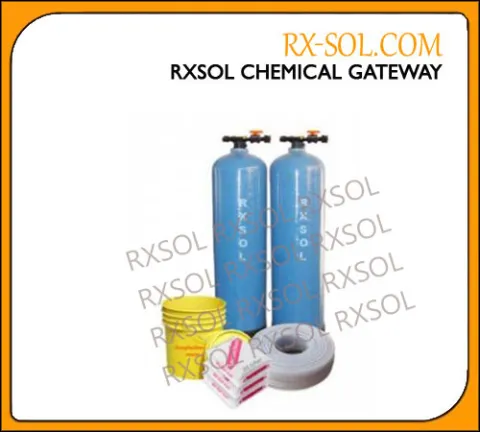
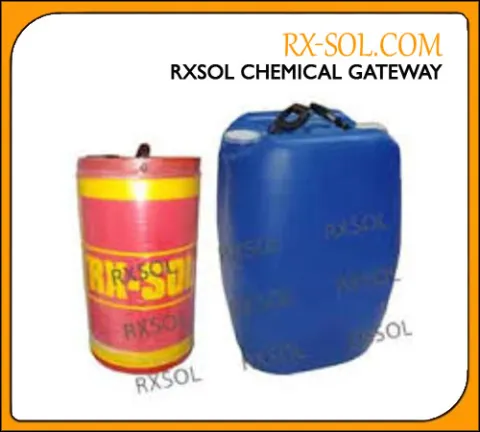
Water Filter, Vessel, Softner, Accessory
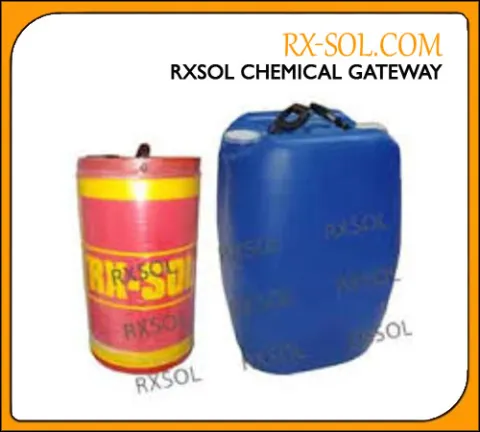
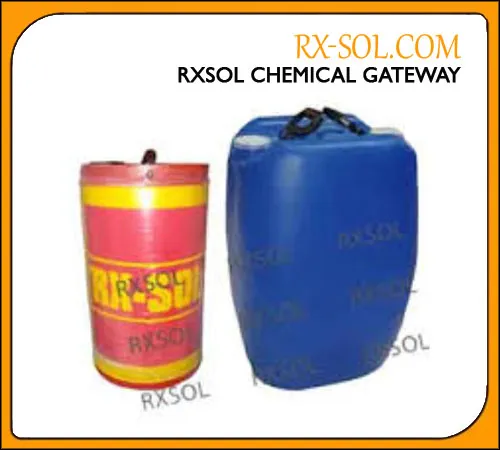
Sodium Hypo Chlorite 35 Kg
- Part number
- RXSOL-31-3025-035
- Brand
- RXSOL
Overview
A 12% solution is widely used in waterworks for the chlorination of water and a 15% solution is more commonly used for disinfection of waste water in treatment plants. High-test hypochlorite (HTH) is sold for chlorination of swimming pools and contains approximately 30% calcium hypochlorite. The crystalline salt is also sold for the same use; this salt usually contains less than 50% of calcium hypochlorite. However, the level of active chlorine may be much higher.
Technical specifications
| 12.5% wt. SODIUM HYPOCHLORITE | EXTRA - PURE |
|---|
|||
| 12.5 | 13.2 ||| |
|---|
Available Chlorine (%wt) |||
| 11.9 | 12.6 ||| |
|---|
Available Chlorine (%vol) |||
| 14.3 | 15.3 ||| |
|---|
Available Chlorine grams/liter |||
| 143 | 153 ||| |
|---|
Excess Caustic (%wt) |||
| 5 | 80 ||| |
|---|
Specific Gravity @ 60°F |||
| 1.197 | 1.220 ||| |
|---|
pH |||
| 1 | 13.0 ||| |
|---|
Applications
Sodium hypochlorite is the salt formed by a negatively charged hypochlorite ion (OCl-) and a positively charged sodium ion (Na+). Pure hypochlorite is highly reactive and unstable; therefore, it is usually supplied as a dilute aqueous solution. In solution, hypochlorite eventually decomposes to yield a variety of byproducts including oxygen, chlorine gas, and salt. One of these byproducts, hypochlorous acid, is a powerful oxidizing agent (meaning it can accept electrons from other materials) that lends hypochlorite excellent bleaching and disinfecting abilities. The term "available chlorine" is often used to describe the concentration of hypochlorous acid in solution (which provides a measure of the solution's oxidative ability). Sodium hypochlorite (NaOCl), is commercially available in several solution concentrations, with 12% being the most common for bulk, as this material is highly unstable salt which become sodium chlorate easily. It is formed by the electrolysis of sodium chloride solution when chlorine is bubbled through cold caustic soda solution. Its powerful disinfection and oxidation properties offer a wide range of applications include bleaching in both the paper and textile industries, water purification, odour control, chemical Intermediates and etc. Sodium hypochlorite is used in household bleach material to remove stains particularly on cotton. Chlorine is a general biocide substance killing germs, micro-organisms, algae, etc. The most widely used chloride chemical disinfectants are chlorine, ozone, chlorine dioxide and chloramine. Hypochlorite is an alternative choline source when chlorine gas is impractical. The commercially available liquid hypochlorite form is sodium hypochlorite (NaOCl) which is used as the disinfectant in hospitals. But this is highly caustic, ethanol class disinfection has replaced. Sodium hypochlorite have also been used extensively in the disinfection of drinking-water. Hypochlorite anion,ClO-, changes the oxidation-reduction potential of the cell, and resulting in the inactivations of the micro-organism's function. Hypochlorite [or chlorate(I)] contains the ion, ClO- ; chlorite [or chlorate(III)], ClO2-; Chlorate [or chlorate(V)], ClO3-; perchlorate [or chlorate(VII)], ClO4-. Hypochlorite solution gradually releases chlorine into water. Sodium hypochlorite is used as a bleaching and disinfection agent for both industry and household, oxidant, sterilizer, decoloring agent, deodorant, water Treatment and food additive. Sodium hypochlorite phosphate, an inclusion complex of trisodium phosphate and sodium hypochlorite, is a dry form of sodium hypochlorite. providing germicidal and disinfectant properties as well as alkalinity. It is used in as a bactericide in food and dairy processing and cleanser of medical instruments and scouring. It is used in detergents, automatic dishwasher detergent and laundry soaps.
Dosage and directions
Note : Store in cool place
UN No : 1791
IMDG CLASS : 8
PACKING GROUP : III
ODOUR : IRRITATING , PUNGENT ODOUR
R31: Contact with acids liberates toxic gases
R34: Causes burns
S-PHRASES
S1/2: Keep locked up and out of the reach of children.
S28: After contact with skin, wash immediately with plenty of water
S45: In case of accident or if you feel unwell, seek medical advice (show the label where possible)
S50: Do not mix with acids
S50: Do not mix with reducing agents
X2: Restricted to professional users.Warning! Avoid exposure - obtain special instructions before use.
A weak soln. ( 1.2 % ) is used. For purifying water
0.02 to 0 .2 % volumetric is sufficient for Potable Water Treatment
SODIUM HYPOCHLORITE
ACTIVE INGREDIENT:
Sodium Hypochlorite as Chlorine : 15%
Sodium Hydroxide : 1%
INERT INGREDIENTS: : 84%
Total 100%
12.5% wt. SODIUM HYPOCHLORITE - EXTRA - PURE
Characteristics and notes
Appearance: Clear greenish-yellow liquid miscible in any proportion with water.
This product meets the requirements of NSF standard 60 for drinking water.
-
Also used as a disinfectant and germicide , especially in the sterilization of water.
-
It is also used for making wool unshrinkable and in the manufactire of chloroform.
-
For the purpose of disinfection and bleaching , a weak soln. ( 1.2 % ) is used. For purifying water 0.02 to 0 .2 % volumetric is sufficientPotable Water Treatment
- Aquatics and Pools
- Odor Control/Corrosion Control
- Food & Beverage Processing
- Wastewater Treatment
- Cooling Towers, Inland Power Stations & Industry
- Irrigation Systems
- Agriculture/Farming
Safety and SDS
Read the safety data sheet before handling. Wear suitable gloves and eye protection.
View safety data sheet
| Porduct Name | Sodium Hypo Chlorite |
| Part Number | RXSOL-31-3025-035 |
Company Details:
RX MARINE INTERNATIONAL
105, A wing , BSEL , TECH PARK.
VASHI ,NEW BOMBAY 400703 INDIA
Branch : Kandla, Mumbai , Chennai, Vizag, Kolkata, UAE , OMAN , CANADA and KENYA
| Phone | +91 22 20871200 - 1400 |
| Fax | +91 22 27612100 :::AOH :0091 9821214367 |
| rxsolchemicals@gmail.com | |
| Website | www.rxmraine.com |
| Chemical Name | Cas No | EC No | Weight | Formula |
| Sodium hypochlorite solution | 7681-52-9 | 231-668-3 | 74,44 g/mol | NaClO |
| Signal Word | Danger | |
| Hazard Statements | No Data available | |
| H290 | May be corrosive to metals | |
| H314 | Causes severe skin burns and eye damage | |
| H440 | Very toxic to aquatic life with long lasting effects. | |
| Precautionary statement(s) | ||
| P234 | Keep only in original packaging | |
| P273 | Avoid release to the environment. | |
| P280 | Wear protective gloves/ protective clothing/ eye protection/ face protection | |
| P303 + P361 + P353 | IF ON SKIN (or hair): Take off immediately all contaminated clothing. Rinse skin with water | |
| P304 + P340 + P310 | IF INHALED: Remove person to fresh air and keep comfortable for breathing. Immediately call a POISON CENTER/ doctor | |
| P305 + P351 + P338 | .IF IN EYES: Rinse cautiously with water for several minutes. Remove contact lenses, if present and easy to do. Continue rinsing | |
| Supplemental Hazard information (EU) | Contact with acids liberates toxic gas. |
| General advice | First aiders need to protect themselves. Show this material safety data sheet to the doctor in attendance. |
| If inhaled | After inhalation: fresh air. Call in physician |
| Swallowed | After eye contact: rinse out with plenty of water. Immediately call in ophthalmologist. Remove contact lenses. |
| Skin Contact | In case of skin contact: Take off immediately all contaminated clothing. Rinse skin with water/ shower. Call a physician immediately. |
| Eye contac | After eye contact: rinse out with plenty of water. Immediately call in ophthalmologist. Remove contact lenses. |
| Ingestion | Rinse mouth with water. Do not induce vomiting. Never give anything by mouth to an unconscious person. Call a doctor or Poison Control Center immediately. |
| Most important symptoms and effects, both acute and delaye | The most important known symptoms and effects are described in the labelling (see section 2.2) and/or in section 11 |
| Indication of any immediate medical attention and special treatment needed | No data available |
| Flammability | May be combustible at high temperature. |
| Suitable extinguishing media | Use extinguishing measures that are appropriate to local circumstances and the surrounding environment. |
| Unsuitable extinguishing media | For this substance/mixture no limitations of extinguishing agents are given. |
| Special hazards arising from the substance or mixture | Hydrogen chloride gas Sodium oxides Not combustible. Ambient fire may liberate hazardous vapours.. |
| Further information | Suppress (knock down) gases/vapors/mists with a water spray jet. Prevent fire extinguishing water from contaminating surface water or the ground water system. |
|
Hazardous combustion products |
No data available |
| Advice for firefighters | Stay in danger area only with self-contained breathing apparatus. Prevent skin contact by keeping a safe distance or by wearing suitable protective clothing. |
| Protective Equipment | No data available |
| Specific Hazards Arising from the Chemical | No data available |
| Personal precautions, protective equipment and emergency procedures | Advice for non-emergency personnel: Avoid generation and inhalation of dusts in all circumstances. Avoid substance contact. Ensure adequate ventilation. Evacuate the danger area, observe emergency procedures, consult an expert. For personal protection see section 8 |
| Personal Protection | Advice for non-emergency personnel: Avoid inhalation of dusts. Evacuate the danger area, observe emergency procedures, consult an expert. Advice for emergency responders: Protective equipment see section 8. |
| Enviromental Precaution | Do not let product enter drains. |
|
Methods and materials for containment and cleaning |
Cover drains. Collect, bind, and pump off spills. Observe possible material restrictions (see sections 7 and 10). Take up carefully. Dispose of properly. Clean up affected area. Avoid generation of dusts. |
| Reference to other sections | For disposal see section 13. |
| Advice on safe handling | For precautions see section 2.2. |
| Incompatible materials | Keep away from alkalis, strong oxidizing agents and metals. Provide containment walls of adequate capacity to hold any accidental spills. |
| Hygiene measures | Immediately change contaminated clothing. Apply preventive skin protection. Wash hands and face after working with substance. For precautions see section 2.2. |
| Advice on safe handling | No data available |
| Conditions for safe storage, including any incompatibilities | Storage conditions No metal containers. Tightly closed. Do not store near acids. Storage stabilityRecommended storage temperature |
| Storage conditions | No data available |
| Storage class | Storage class (TRGS 510): 8B: Non-combustible, corrosive hazardous materials |
| Specific end use(s) | Apart from the uses mentioned in section 1.2 no other specific uses are stipulated |
| Advice on general occupational hygiene | No data available |
| Exposure controls | Ingredients with workplace control parameters. |
| Engineering Control | Personal protective equipmen |
| Eye/face protection | Use equipment for eye protection tested and approved under appropriate government standards such as NIOSH (US) or EN 166(EU). Tightly fitting safety goggles |
| Body Protection | Protective clothing. |
| Skin protection | Full contact Material: Nitrile rubber Minimum layer thickness: 0,11 mm Break through time: 480 min Material tested:Dermatril® (KCL 740 / Aldrich Z677272, Size M) Splash contact Material: Nitrile rubber Minimum layer thickness: 0,11 mm |
| Respiratory protection |
Required when vapours/aerosols are generated. Our recommendations on filtering respiratory protection are based on the following standards: DIN EN 143, DIN 14387 and other accompanying standards relating to the used respiratory protection system. Recommended Filter type: Filter type ABEK The entrepeneur has to ensure that maintenance, cleaning and testing of respiratory protective devices are carried out according to the instructions of the producer. These measures have to be properly documented.
|
| Other Protection Measure | Handle in accordance with good industrial hygiene and safety practice. |
| Control of environmental exposure | Do not let product enter drains. |
| Physical state | liquid |
| Colour | No data available |
| Odour | No data available |
| Odor Threshold | Not Applicable |
| pH | 5,5 - 6,5 at 50 g/l at 20 °C |
| Melting Point | -28,9 °C |
| Boiling Point | Not applicable |
| Flash Point | No data available |
| Evaporation Rate | Not Applicable |
| Flammability (solid, gas) | No data available |
| Explosive limits | No Data Available |
| Upper/lower flammability or explosive limits | No data available |
| Autoignition temperature | No data available |
| Decomposition temperature | No data available |
| Vapour pressure | No data available |
| Viscosity |
Viscosity, kinematic: No data available Viscosity, dynamic: No data available |
| Density | No data available |
| Relative Density | No data available |
| Specific Gravity | No data available |
| Partition coefficient | No data available |
| Explosive properties | No data available |
| Solubility | No data available |
| Ignition temperature | No information available. |
| Particle characteristics | No data available |
| Reactivity | No data available |
| Chemical stability | The product is chemically stable under standard ambient conditions (room temperature) |
| Possibility of hazardous reactions | Violent reactions possible with: Generates dangerous gases or fumes in contact with: Acids The generally known reaction partners of water. |
| Conditions to avoid | no information available |
| Incompatible materials |
Strong acids, Organic materials, Powdered metals, Forms shock-sensitive mixtures with certain other materials., Amines, Reacts violently with ammonium salts, aziridine, methanol, and phenylaceto primary aliphatic or aromatic amines to form explosively unstable n-chlor 55°C.Metals
|
| Hazardous decomposition products | In the event of fire: see section 5 |
| Acute toxicity | Symptoms: If ingested, severe burns of the mouth and throat, as well as a danger of perforation of the esophagus and the stomach. |
| Skin corrosion/irritation | Mixture causes burns. |
| Serious eye damage/irritation | Mixture causes serious eye damage. Risk of blindness! |
| Respiratory or skin sensitization | No data available |
| Carcinogenicity | No data available |
| Germ cell mutagenicity | No data available |
| Reproductive toxicity | No data available. |
| Specific target organ toxicity - single exposure |
No data available
|
| Additional Information | The substance/mixture does not contain components considered to have endocrine disrupting properties according to REACH Article 57(f) or Commission Delegated regulation (EU) 2017/2100 or Commission Regulation (EU) 2018/605 at levels of 0.1% or higher. To the best of our knowledge, the chemical, physical, and toxicological properties have not been thoroughly investigated. Hazardous properties cannot be excluded but are unlikely when the product is handled appropriately. The following applies to ammonium salts in general: after swallowing: local irritation symptoms, nausea, vomiting, diarrhoea. Systemic effect: after the uptake of very large qantities: drop in blood pressure, collapse, CNS disorders, spasms, narcotic conditions, respiratory paralysis, haemolysis. Handle in accordance with good industrial hygiene and safety practice. |
| Persistence and degradability | The methods for determining biodegradability are not applicable to inorganic substances |
| Toxicity to fish | LC50 - Oncorhynchus mykiss (rainbow trout) - 0,107 mg/l - 96 h Remarks: (ECHA) |
| Toxicity to daphnia and other aquatic invertebrates | No data available |
| Toxicity | No data available |
| Toxicity to bacteria | No data available |
| Toxicity to algae | No data available) |
| Products Biodegradation | No data available |
| Mobility in soil | No data available |
| Results of PBT and vPvB assessment | This substance/mixture contains no components considered to be either persistent, bioaccumulative and toxic (PBT), or very persistent and very bioaccumulative (vPvB) at levels of 0.1% or higher. |
| Endocrine disrupting properties | The substance/mixture does not contain components considered to have endocrine disrupting properties according to REACH Article 57(f) or Commission Delegated regulation (EU) 2017/2100 or Commission Regulation (EU) 2018/605 at levels of 0.1% or higher. |
| Other adverse effects | No data available |
|
Waste treatment methods |
No data available |
| UN number | ADR/RID:1791 IMDG:1791 IATA:1791 |
| UN proper shipping name |
ADR/RID:HYPOCHLORITE SOLUTION
IMDG:HYPOCHLORITE SOLUTION(sodium hypochlorite solution)
IATA:HYPOCHLORITE SOLUTION
|
| Transport hazard class(es) | ADR/RID: 8 IMDG: 8 IATA:8 |
| Packaging group | ADR/RID:III IMDG:III IATA:III |
| Environmental hazards | ADR/RID:Yes IMDG: No Marine pollutant: Yes IATA: No |
| Special precautions for user | Tunnel restriction code : (E) |
| Further information | No data available |
| Safety, health and environmental regulations/legislation specific for the substance or mixture | This material safety data sheet complies with the requirements of Regulation (EC) No. 1907/2006. |
| Other regulations | Take note of Dir 94/33/EC on the protection of young people at work. |
| Chemical Safety Assessment | For this product a chemical safety assessment was not carried out |
| Other Information |
The information above is believed to be accurate and represents the best information currently available to us. However, we make no warranty of merchantability or any other warranty, express or implied, with respect to such information, and weassume no liability resulting from its use. Users should make their own investigations to determine the suitability of the information for their particular purposes. In no event shall be liable for any claims, losses, or damages of any third party or for lost profits or any special, indirect, incidental, consequential or exemplary damages, howsoever arising, even if Rx Marine International has been advised of the possibility of such damages. DISCLAIMER OF LIABILITY :The information in this SDS was obtained from sources which we believe are reliable. However, the information is provided without any warranty, express or implied, regarding its correctness. The conditions or methods of handling, storage, use or disposal of the product are beyond our control and may be beyond our knowledge. For this and other reasons, we do not assume responsibility and expressly disclaim liability for loss, damage or expense arising out of or in any way connected with the handling, storage, use or disposal of the product. This MSDS was prepared and is to be used only for this product. If the product is used as a component in another product, this MSDS information may not be applicable. |
| solid |
Availability
Sodium Hypo Chlorite manufacturer supplier distributor in Mumbai, Kandla, Kolkata, Vizag, Chennai, India, Fujairah, Dubai UAE, Muscat Oman, Kenya Africa. Get the best quality of Sodium Hypo Chlorite at a competitive price from us. We have ready stock of Sodium Hypo Chlorite in India, UAE Gulf, Oman, Kenya Africa. Contact us for bulk as well as small orders.