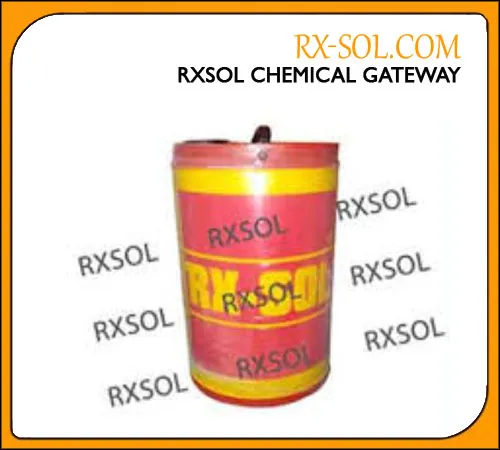
SODA ASH 25 Kg
- Part number
- RXSOL-19-1307-050
- Category
- Powder Chemical
- Brand
- RXSOL
Overview
Sodium carbonate (also known as Carbonato Di Sodio), Na2CO3 is a sodium salt of carbonic acid. It most commonly occurs as a crystalline heptahydrate, which readily effloresces to form a white powder . Sodium carbonate is domestically well known for its everyday use as a water softener.
Technical specifications
|
Identification |
|
|
CAS number |
497-19-8 |
|
EC number |
207-838-8 |
|
Properties |
|
|
Molecular formula |
Na2CO3 |
|
Molar mass |
105.9784 g/mol |
|
Appearance |
White solid, hygroscopic |
|
Odor |
Odorless |
|
Density |
2.54 g/cm3 |
|
Melting point |
851 °C |
|
Boiling point |
1633 °C |
|
Solubility in water |
7 g/100 mL (0 °C) |
|
Solubility |
Insoluble in ethanol, acetone |
|
Basicity (pKb) |
4.67 |
|
Refractive index (nD) |
1.485 |
|
EU classification |
Irritant (Xi) |
|
R-phrases |
R36 |
|
S-phrases |
(S2), S22, S26 |
|
NFPA 704 |
0 1 1 |
|
Flash point |
Non-flammable |
|
LD50 |
4090 mg/kg (rat, oral) |
Applications
Sodium carbonate is used as a relatively strong base in various settings. For example, sodium carbonate is used as a pH regulator to maintain stable alkaline conditions necessary for the action of the majority of photographic film developing developing agents.
It is a common additive in municipal pools used to neutralize the acidic effects of chlorine and raise pH. In chemistry, it is often used as an electrolyte. This is because electrolytes are usually salt-based, and sodium carbonate acts as a very good conductor in the process of electrolysis. In addition, unlike chloride ions, which form chlorine gas, carbonate ions are not corrosive to the anodes. It is also used as a primary standard for acid-base titrations because it is solid and air-stable, making it easy to weigh accurately.
Dosage and directions
In domestic use, it is used as a water softener during laundry. It competes with the magnesium and calcium ions in hard water and prevents them from bonding with the detergent being used. Without using washing soda, additional detergent is needed to soak up the magnesium and calcium ions. Called washing soda, soda crystals, or sal soda in the detergent section of stores, it effectively removes oil, grease, and alcohol stains. Sodium carbonate is also used as a descaling agent in boilers such as those found in coffee pots, espresso machines, etc.
In dyeing with fiber-reactive dyes, sodium carbonate is used to ensure proper chemical bonding of the dye with cellulose (plant) fibers, typically before dyeing (for tie dyes), mixed with the dye (for dye painting), or after dyeing (for immersion dyeing).
Sodium carbonate is also used in the production of sherbet powder. The cooling and fizzing sensation results from the endothermic reaction between sodium carbonate and a weak acid, commonly citric acid, releasing carbon dioxide gas, which occurs when the sherbet is moistened by saliva.
Sodium carbonate is used by the brick industry as a wetting agent to reduce the amount of water needed to extrude the clay.
In casting, it is referred to as "bonding agent" and is used to allow wet alginate to adhere to gelled alginate.
Sodium carbonate is used in toothpastes, where it acts as a foaming agent and an abrasive, and to temporarily increase mouth pH.
Sodium carbonate is used to create the photo process known as reticulation.
Sodium carbonate, in a solution with common salt, may be used for cleaning silver. In a non-reactive container (glass, plastic or ceramic) aluminium foil and the silver object are immersed in the hot salt solution. The elevated pH dissolves the aluminium oxide layer on the foil and enables an electrolytic cell to be established . Hydrogen ions produced by this reaction reduce the sulphide ions on the silver restoring silver metal. The sulphide can be released as small amounts of hydrogen sulphide. Rinsing and gently polishing the silver restores a highly polished condition.
Safety and SDS
Read the safety data sheet before handling. Wear suitable gloves and eye protection.
View safety data sheet
| Product Name | Sodium Carbonate |
| Part Number | RXSOL-19-1307-050 |
Company Details:
RX MARINE INTERNATIONAL
105, A wing , BSEL , TECH PARK.
VASHI ,NEW BOMBAY 400703 INDIA
Stock Point : Mumbai, Kandla, Kolkata, Chennai, Visakhapatnam, Oman, Fujairah, Canada
| Phone | +91 22 27815540 / 41 / 42 |
| Fax | +91 22 2781 1318 :::AOH :0091 9821214367 |
| rxsolchemicals@gmail.com | |
| Website | www.rxmarine.com |
| Name of Substance | Cas Number | EC Number | Wt. % | Molecular Formula | Molar Mass |
| Sodium Carbonate | 497-19-8 | 207-838-8 | 99 - 99.5% | Na2CO3 | 105.99 g/mol |
| Signal Word | Warning |
| Hazard Statements | H319 Causes serious eye irritation. |
|
Potential Chronic Health Effects |
Slightly hazardous in case of skin contact (sensitizer). CARCINOGENIC EFFECTS: Not available. MUTAGENIC EFFECTS: Not available. TERATOGENIC EFFECTS: Not available. DEVELOPMENTAL TOXICITY: Not available. The substance may be toxic to upper respiratory tract, skin, eyes. Repeated or prolonged exposure to the substance can produce target organs damage |
| Precautionary statements - response |
P305 + P351 + P338 IF IN EYES: Rinse cautiously with water for several minutes. Remove contact lenses, if present and easy to do. Continue rinsing. |
| General Note | Do not leave affected person unattended. Remove victim out of the danger area. Keep affected person warm, still and covered. Take off immediately all contaminated clothing. In all cases of doubt, or when symptoms persist, seek medical advice. In case of unconsciousness place person in the recovery position. Never give anything by mouth. |
| Eye Contact | Check for and remove any contact lenses. In case of contact, immediately flush eyes with plenty of water for at least 15 minutes. Cold water may be used. Get medical attention. |
| Skin Contact | Wash off immediately with plenty of water for at least 15 minutes. Use a mild soap if available. Wash clothing before reuse. Thoroughly clean shoes before reuse. Get medical attention if irritation develops and persists. |
| Inhalation: | If inhaled, remove to fresh air. If not breathing, give artificial respiration. If breathing is difficult, give oxygen. Get medical attention. |
| Ingestion: | Do NOT induce vomiting unless directed to do so by medical personnel. Never give anything by mouth to an unconscious person. Loosen tight clothing such as a collar, tie, belt or waistband. Get medical attention if symptoms appear. Serious Ingestion: Not available. |
| Flammability | Non-flammable. |
| Flash Point | Not applicable. |
| Suitable extinguishing media | Use extinguishing measures that are appropriate to local circumstances and the surrounding environment. |
|
Hazardous combustion products |
Emits Na2O fumes when heated to decompositon. |
| Explosion Hazards in Presence of Various Substances: | Risks of explosion of the product in presence of mechanical impact: Not available. Risks of explosion of the product in presence of static discharge: Not available. |
| Special Remarks on Fire Hazard | Sodium carbonate can ignite and burn fiercely in contact with fluoride. Sodium Carbonate in contact with fluorine decomposed at ordinary temperature with incandescence. |
| Advice for firefighters | In case of fire and/or explosion do not breathe fumes. Co-ordinate firefighting measures to the fire surroundings. Do not allow firefighting water to enter drains or water courses. Collect contaminated firefighting water separately. Fight fire with normal precautions from a reasonable distance. |
| Small Spillage | Use appropriate tools to put the spilled solid in a convenient waste disposal container. If necessary: Neutralize the residue with a dilute solution of acetic acid. Finish cleaning by spreading water on the contaminated surface and dispose of according to local and regional authority requirements. |
| Personal Protection | Advice for non-emergency personnel: Avoid inhalation of dusts. Avoid substance contact. Ensure adequate ventilation. Evacuate the danger area, observe emergency procedures, consult an expert. |
| Enviromental Precaution | Do not let product enter drains. |
|
Methods and materials for containment and cleaning |
Cover drains. Collect, bind, and pump off spills. Observe possible material restrictions (see sections 7 and 10). Take up dry. Dispose of properly. Clean up affected area. Avoid generation of dusts. |
| Large Spill | Use a shovel to put the material into a convenient waste disposal container. Neutralize the residue with a dilute solution of acetic acid. Finish cleaning by spreading water on the contaminated surface and allow to evacuate through the sanitary system. |
| Handling and Precaution | Do not ingest. Do not breathe dust. Wear suitable protective clothing. In case of insufficient ventilation, wear suitable respiratory equipment. If ingested, seek medical advice immediately and show the container or the label. Avoid contact with skin and eyes. Keep away from incompatibles such as acids. |
| Storage | Hygroscopic. Keep container tightly closed. Keep container in a cool, well-ventilated area. Do not store above 24°C (75.2°F). |
| Advice on general occupational hygiene | Change contaminated clothing. Wash hands after working with substance. |
|
Engineering Controls: |
Use process enclosures, local exhaust ventilation, or other engineering controls to keep airborne levels below recommended exposure limits. If user operations generate dust, fume or mist, use ventilation to keep exposure to airborne contaminants below the exposure limit. |
| Personal Protection | Splash goggles. Lab coat. Dust respirator. Be sure to use an approved/certified respirator or equivalent. Gloves. |
|
Exposure Limits: |
Particulate Not Otherwise Classified: ACGIH OSHA 10 mg/m³ - Inhalable particulate 50 mppcf* or 15 mg/m³ - Total Dust 3 mg/m³ - Respirable particulate 15 mppcf* or 5 mg/m³ - Respirable Fraction |
| Other Protection Measure | Splash goggles. Full suit. Dust respirator. Boots. Gloves. A self contained breathing apparatus should be used to avoid inhalation of the product. Suggested protective clothing might not be sufficient; consult a specialist BEFORE handling this product. |
Gloves Suit
| Form | Powder |
| Colour | White |
| Odour | Odourless |
| Solubility | Soluble in water |
| Soluble in water | 212.5 g/lat 20 °C |
| Specific Gravity (20 °C | 2.532 (Water = 1) |
| pH (1% Solution) | 11.50 (Basic) |
| Boiling Point | Not Applicable |
| Melting Point | 851°C (1563.8°F) |
| Critical Temperature | Not Available |
| Flash Point | Not Applicable |
| Explosive limits | Not explosive Materials |
| Vapour pressure | Not Applicable |
| Vapour Density | Not Applicable |
| Viscosity | Not Applicable |
| Partition coefficient | Not Determine |
| Explosive properties | None |
| Flamibility Solid / Gas | This Product is not Flammable |
| Recativity | Violent reactions |
| Stability | Product is stable. |
| Possibility of hazardous reactions |
Aluminium, Alkaline earth metals, organic nitro compounds, Fluorine, Alkali metals, nonmetallic oxides, conc. sulfuric acid . |
| Conditions to avoid | No Information Available |
| Incompatible materials | No Information Available |
|
Hazardous combustion products |
No information Available. |
| Route of Entry | Inhalation. Ingestion |
| Toxicity to Animals | WARNING: THE LC50 VALUES HEREUNDER ARE ESTIMATED ON THE BASIS OF A 4-HOUR EXPOSURE. Acute oral toxicity (LD50): 4090 mg/kg [Rat]. Acute toxicity of the dust (LC50): 1200 mg/m3 2 hours [Mouse]. |
| Chronic Effects on Humans | May cause damage to the following organs: upper respiratory tract, skin, eyes. |
| Other Toxic Effects on Humans | Hazardous in case of skin contact (irritant), of ingestion, of inhalation (lung irritant). |
| Special Remarks on Toxicity to Animals | LDL (Lowest Published Lethal Dose) [Man] - Route: Oral; Dose: 714 mg/kg |
| Special Remarks on Chronic Effects on Humans | May cause adverse reproductive effects based on animal test data |
| Special Remarks on other Toxic Effects on Humans |
Acute Potential Health Effects: Skin: Causes skin irritation with possible burns depending on the concentration, site (abraded or intact skin), and duration of exposure. Eyes: Causes eye irritation and possible burns. Concentrated solutions may cause permanent corneal injury (permanent corneal opacity). Ingestion: Sodium carbonate ingestion may cause irritation of the digestive tract resulting in nausea, vomiting, diarrhea, thirst, abdominal pain depending on concentration and amount ingested. May also affect the cardiovascular system . Inhalation: Dust may cause respiratory tract and mucous membrane irritation with coughing and shortness of breath (dyspnea), pulmonary edema. Chronic Potential Health Effects: Chronic inhalation may result in decreased pulmonary function, nasal congestion, nosebleeds, perforation of the nasal septum. Other effects of chronic exposure are skin (dermatitis and ulceration), and gastrointestinal complaints. However, the effects of chronic exposure seem to be reversible if exposure is decreased. |
| Toxicity |
Toxicity to fish :static test LC50 Lepomis macrochirus (Bluegill sunfish): 300 mg/l; 96 h (ECHA) Toxicity to daphnia and other aquatic invertebrates semi-static test EC50 Ceriodaphnia dubia (water flea): 220 - 227 mg/l; 48 h |
| Process of degradability | The methods for determining the biological degradability are not applicable to inorganic substances. |
| Bioaccumulative potential | Partition coefficient: n-octanol/water.Not applicable |
| Mobility in soil | No Information available. |
| Results of PBT and vPvB assessment |
Substance does not meet the criteria for PBT or vPvB according to Regulation (EC) No 1907/2006, Annex XIII. |
| Other adverse effects | Discharge into the environment must be avoided. |
| Waste treatment | Waste material must be disposed of in accordance with the national and local regulations. Leave chemicals in original containers. No mixing with other waste. Handle uncleaned containers like the product itself. |
| DOT Classification | Not a DOT controlled material (United States). |
| Identification | Not Applicable |
| Special Provisions for Transport | Not Applicable |
| Fedral and State Regulation | TSCA 8(b) inventory: Sodium carbonate |
| Other Regulations informationWater pollution effect indication | EINECS: This product is on the European Inventory of Existing Commercial Chemical Substances. |
| WHMIS (Canada): | CLASS D-2B: Material causing other toxic effects (TOXIC). |
| DSCL (EEC) | R36/37/38- Irritating to eyes, respiratory system and skin. S22- Do not breathe dust. S26- In case of contact with eyes, rinse immediately with plenty of water and seek medical advice. |
| HMIS (U.S.A.) |
Health Hazard: 2 Fire Hazard: 0 Reactivity: 1 Personal Protection: E |
| National Fire Protection Association |
Health: 2 Flammability: 0 Reactivity: 1 |
|
Protective Equipment: |
Gloves. Lab coat. Dust respirator. Be sure to use an approved/certified respirator or equivalent. Wear appropriate respirator when ventilation is inadequate. Splash goggles. |
Precautionary statements
Response
P305 + P351 + P338
IF IN EYES: Rinse cautiously with water for several minutes. Remove contact lenses, if present and easy to do. Continue rinsing
The information above is believed to be accurate and represents the best information currently available to us. However, we make no
warranty of merchantability or any other warranty, express or implied, with respect to such information, and we assume no liability resulting
from its use. Users should make their own investigations to determine the suitability of the information for their particular purposes. In no
event shall be liable for any claims, losses, or damages of any third party or for lost profits or any special, indirect, incidental, consequential
or exemplary damages, howsoever arising, even if RX Marine International has been advised of the possibility of such damages.
DISCLAIMER OF LIABILITY :The information in this SDS was obtained from sources which we believe are reliable. However, the information is provided without any warranty, express or implied, regarding its correctness. The conditions or methods of handling, storage, use or disposal of the product are beyond our control and may be beyond our knowledge. For this and other reasons, we do not assume responsibility and expressly disclaim liability for loss, damage or expense arising out of or in any way connected with the handling, storage, use or disposal of the product. This MSDS was prepared and is to be used only for this product. If the product is used as a component in another product, this MSDS information may not be applicable
Availability
Soda Ash Supplier in Mumbai, Kandla - Gandhidham, Kolkata, Chennai, Visakhapatnam, Fujarah, Oman, Dubai, Abu Dhabi, Sharjah.