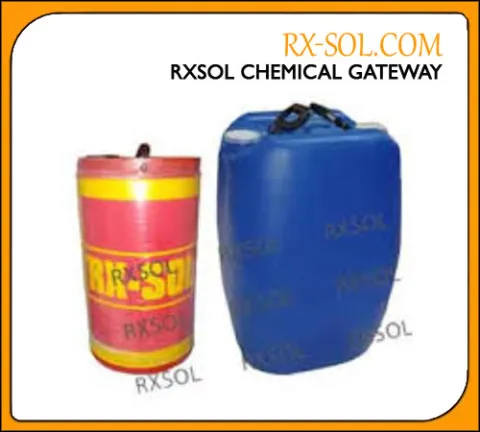
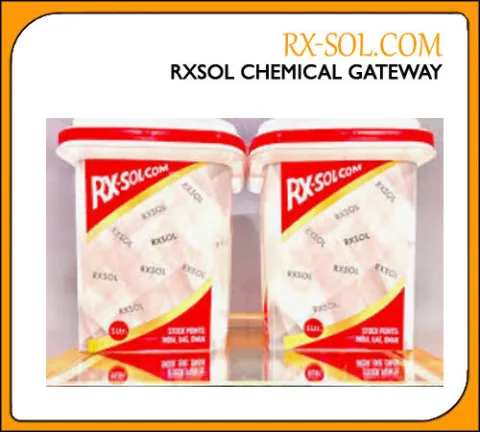
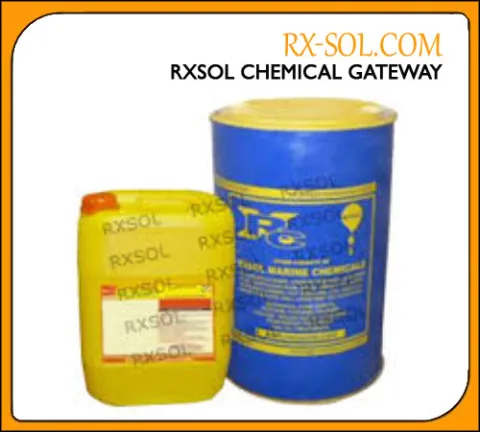
Demineralized water with Inhibitors
- Part number
- RXSOL-27-4024-025
- Category
- Corrosion Inhibitor
- Brand
- RXSOL
Overview
Laser systems - corrosion inhibitor for cooled water system
RXSOL-40-4024 is a high performance corrosion inhibitor developed specifically for water cooled laser systems and hot water heating systems. RXSOL-40-4024 prevents metal corrosion and oxygen consumption in the cooling system water. It is also very safe to use. Many water cooled lasers and modern energy saving heating systems often contain little water, up-to-date measuring and monitoring devices e.g. heat and flow meters, temperature sensors and thermostatic control valves. Such systems are often more sensitive to rust sludge than conventional systems. Because of these technical developments, corrosion prevention should be a priority in every new installation.
RXSOL-40-4024 is used at a concentration of 1-2% system water, i.e. 1-2 Kg per 100 litres of system volume. Dosing should be carried out at a point in the system where thorough mixing is possible using a bypass or a pump.
Characteristics and notes
A Distilled Water with Corrosion Inhibitor specially formulated to provide corrosion protection during equipment operation, flushing, or storage. The additive forms a protective passive film on metal surfaces, preventing rust and oxidation in closed systems. Ideal for cooling circuits, engine jackets, and hydraulic systems requiring non-conductive and corrosion-free water. Ensures long-term stability without contributing to scale or sludge formation.
- Corrosion-resistant formulation – Protects steel, copper, and aluminum surfaces effectively.
- Non-scaling – Maintains system cleanliness with zero mineral deposits.
- High purity – Distilled base water ensures low conductivity and chemical stability.
- Ready-to-use – Simplifies maintenance and enhances system reliability.
Safety and SDS
Read the safety data sheet before handling. Wear suitable gloves and eye protection.
View safety data sheet
| Product Name | RXSOL-40-4024 |
| Product Type | Corrosion Inhibitor - Laser systems |
Company Details:
RX MARINE INTERNATIONAL
105, A wing , BSEL , TECH PARK.
VASHI ,NEW BOMBAY 400703 INDIA
| Phone | +91 22 65113333 / 5555 / 9999 / 27611360 |
| Fax | +91 22 2781 1318 :::AOH :0091 9821214367 |
| rxsolchemicals@gmail.com |
This product is classified as dangerous in accordance with the Preparations Directive 1999/45/EC
|
Hazardous Substance(s) |
EINECS / ELINCS NO |
SYMBOL |
R-PHRASES |
% (w/w) |
|
Potassium Hydroxide |
215-181-3 |
C, Xn |
R22, R35 |
1 - 5 |
|
Sodium Tetraborate |
215-540-4 |
OEL |
1 - 5 |
|
| Hydroxyphosphonoacetic acid, tripotassium salt | Xn |
R22, R43. R48/22 |
10 - 30 |
Refer to Section 16 for descriptions of relevant risk phrases and Notas
|
HAZARD CLASSIFICATION |
This product is classified as dangerous in accordance with the Preparations Directive 1999/45/EC. Irritating to eyes and skin. May cause sensitization by skin contact. Harmful: danger of serious damage to health by prolonged exposure if swallowed. |
|
HUMAN HEALTH HAZARDS - ACUTE |
|
| INHALATION | Not a likely route of exposure. Aerosols or product mist may irritate the upper respiratory tract |
| SKIN CONTACT | Can cause moderate irritation. Prolonged or frequently repeated skin contact may cause allergic reactions in some individuals. |
| EYE CONTACT | Irritating, and may injure eye tissue if not removed promptly |
| INGESTION | Not a likely route of exposure. There may be irritation to the gastro-intestinal tract. |
| HUMAN HEALTH HAZARDS - CHRONIC | No adverse effects expected other than those mentioned above |
|
INHALATION |
Remove to fresh air, treat symptomatically. If symptoms develop, seek medical advice. |
|
SKIN CONTACT |
Immediately flush with plenty of water for at least 15 minutes. If symptoms develop, seek medical advice. |
|
EYE CONTACT |
Immediately flush eye with water for at least 15 minutes while holding eyelids open. Get medical attention |
|
INGESTION |
Get medical attention. Do not induce vomiting without medical advice. If conscious, washout mouth and give. water to drink. If reflexive vomiting occurs, rinse mouth and repeat administration of water |
| NOTE TO PHYSICIAN | Based on the individual reactions of the patient, the physician's judgement should be used to control symptoms and clinical condition. |
| FLASH POINT |
None |
| EXTINGUISHING MEDIA | This product would not be expected to burn unless all the water is boiled away. The remaining organics may be ignitable. Use extinguishing media appropriate for surrounding fire. |
| FIRE AND EXPLOSION HAZARD | May evolve oxides of carbon (COx) under fire conditions. May evolve oxides of nitrogen (NOx) under fire conditions. |
| SPECIAL PROTECTIVE EQUIPMENT FOR FIRE FIGHTING | In case of fire, wear a full face positive-pressure self contained breathing apparatus and protective suit. |
|
Personal precautions |
Restrict access to area as appropriate until clean-up operations are complete. Use personal protectiv equipment recommended in Section 8 (Exposure Controls/Personal Protection). Stop or reduce any leaks if it is safe to do so. Ventilate spill area if possible. Ensure clean-up is conducted by trained personnel only. Do not touch spilled material. Have emergency equipment (for fires, spills, leaks, etc.) readily available. Notify appropriate government, occupational health and safety and environmental authorities. |
|
METHODS FOR CLEANING UP: |
Soak up spill with absorbent material. Place residues in a suitable, covered, properly labeled container. Wash affected area. LARGE SPILLS: Contain liquid using absorbent material, by digging trenches or by diking. Reclaim into recovery or salvage drums or tank truck for proper disposal. Clean contaminate or by diking. Reclaim into recovery or salvage drums or tank truck for proper disposal. Clean contaminated surfaces with water or aqueous cleaning agents. Contact an approved waste hauler for disposal of contaminated recovered material. Dispose of material in compliance with regulations indicated in Section 13 (Disposal Considerations). |
|
ENVIRONMENTAL PRECAUTIONS |
Do not contaminate surface water. |
|
Handling |
Do not get in eyes, on skin, on clothing. Do not take internally. Use with adequate ventilation. Do not breathe vapors/gases/dust. Keep the containers closed when not in use. Have emergency equipment (for fires, spills. leaks, etc.) readily available. Ensure all containers are labeled. Do not mix with acids. |
|
STORAGE CONDITIONS |
Store in suitable labeled containers. Store the containers tightly closed. Store separately from acids. |
| SUITABLE CONSTRUCTION MATERIAL | HDPE (high density polyethylene), Stainless Steel 304, Compatibility with Plastic Materials can vary; we therefore recommend that compatibility is tested prior to use. |
| SPECIFIC USE(S) | CLOSED LOOP TREATMENT |
| For specific dosages and customized applications please contact your representative |
OCCUPATIONAL EXPOSURE LIMITS
Exposure guidelines have not been established for this product. Available exposure limits for the substance are shown below.
|
Country/Source |
Substance(s) | Category | ppm mg/m3 |
|
AUSTRIA |
Potassium Hydroxide (Inhalable dust) | MAK | 2 |
| BELGIUM | Potassium Hydroxide | STEL | 2 |
| Sodium Tetraborate | TWA | 1 | |
| DENMARK | Potassium Hydroxide | LOFT | 2 |
| Sodium Tetraborate | GV | 1 | |
| FINLAND | Potassium Hydroxide | HTP 8H | 2 |
| FRANCE | Potassium Hydroxide | VLE | 2 |
| Sodium Tetraborate | VME | 1 | |
| IRELAND | Potassium Hydroxide | STEL | 2 |
| Sodium Tetraborate | TWA | 1 | |
| ITALY | Potassium Hydroxide | Ceiling | 2 |
| Sodium Tetraborate (Inhalable fraction.) |
TWA STEL |
2 6 |
|
| NETHERLANDS | Potassium Hydroxide | MAC-C | 2 |
| Sodium Tetraborate | MAC TGG | 1 | |
| NORWAY | Potassium Hydroxide | CEIL | 2 |
| Sodium Tetraborate | ADM. NORM | 1 | |
| SPAIN | Potassium Hydroxide | VLA-EC | 2 |
| Sodium Tetraborate | VLA-ED | 1 | |
| SWEDEN | Potassium Hydroxide (Inhalable dust) |
NGV TGV |
1 2 |
| SWITZERLAND | Potassium Hydroxide (Inhalable dust) | TWA | 2 |
|
Sodium Tetraborate (Inhalable dust) |
TWA | 1 | |
| UNITED KINGDOM | Potassium Hydroxide | STEL | 2 |
| Sodium Tetraborate | TWA | 1 | |
| POLAND | Potassium Hydroxide |
MAC-NDS MAC-NDSCh |
0-5 1 |
| HUNGARY | Potassium Hydroxide |
AK CK |
2 2 |
| CZECH REPUBLIC | Potassium Hydroxide |
PEL NPK-P |
1 2 |
| CROATIA | Potassium Hydroxide | MDK | 2 |
| Sodium Tetraborate | MDK | 1 | |
| ROMANIA | Potassium Hydroxide as NaOH |
TWA STEL |
1 |
| SLOVAKIA | Potassium Hydroxide (Aerosol.) | TWA | 0.5 |
* A skin notation refers to the potential significant contribution to overall exposure by the cutaneous route, including mucous membranes and the eyes.
MONITORING MEASURES:-
A small volume of air is drawn through an absorbant or barrier to trap the substance(s) which can then be desorbed or removed and analyzed as referenced below
|
Substance(s) |
Method | Analysis | Absorban |
| Potassium Hydroxide | US NIOSH: 7401 | Titration | PTFE filter |
| Sodium Tetraborate | US OSHA: 125 | on chromatography | PVC Filter |
ENGINEERING MEASURES:-
The use of local exhaust ventilation is recommended to control emissions near the source. Laboratory samples should be handled in a fumehood. Provide mechanical ventilation of confined spaces.
PERSONAL PROTECTION GENERAL ADVICE:-
The use and choice of personal protection equipment is related to the hazard of the product, the workplace and the way the product is handled. In general, we recommend as a minimum precaution that safety glasses with side-shields and workclothes protecting arms, legs and body be used. In addition any person visiting an area where this product is handled should at least wear safety glasses with side-shields. The applicable European standard can be found in EN 166.
RESPIRATORY PROTECTION:-
Where concentrations in air may exceed the limits given in this section, the use of a half face filter mask or air supplied breathing apparatus is recommended. A suitable filter material depends on the amount and type of chemicals being handled. Consider the use of filter type: A-P The applicable European standard can be found in EN 140, EN 137, EN 143 and EN 14387. In event of emergency or planned entry into unknown concentrations a positive pressure, full-facepiece SCBA should be used. If respiratory protection is required. institute a complete respiratory protection program including selection, fit testing, training, maintenance and inspection.
HAND PROTECTION:-
When handling this product, the use of chemical gauntlets is recommended. The choice of work glove depends on work conditions and what chemicals are handled, but we have positive experience under light handling Conditions using gloves made from PVC Gloves should be replaced immediately if signs of degradation are bserved. Breakthrough time not determined as preparation, consult PPE manufacturers. The applicable European standard can be found in EN 374
SKIN PROTECTION:-
Wear impervious apron and boots. The applicable European standard can be found in EN ISO 20345.
EYE PROTECTION:-
Wear chemical splash goggles. The applicable European standard can be found in EN 166.
HYGIENE RECOMMENDATIONS:-
Use good work and personal hygiene practices to avoid exposure. Keep an eye wash fountain available. Keep a safety shower available. If clothing is contaminated, remove clothing and thoroughly wash the affected area Launder contaminated clothing before reuse. Always wash thoroughly after handling chemicals. When handling this product never eat, drink or smoke.
|
PHYSICAL STATE |
Liquid |
|
APPEARANCE |
Amber |
|
ODOR |
Slight |
| FLASH POINT |
None |
|
SPECIFIC GRAVITY |
1.18 |
| SOLUBILITY IN WATER | Complete |
| pH | (100 %) > 13 |
| VISCOSITY | 6 cps (20 °C) |
| FREEZING POINT | -11 °C |
| BOILING POINT | 100 °C |
| VAPOR PRESSURE | Same as water |
Note: These physical properties are typical values for this product and are subject to change
|
Stability |
Stable under normal conditions |
|
HAZARDOUS POLYMERIZATION |
Hazardous polymerization will not occur |
| CONDITIONS TO AVOID | Avoid extremes of temperature |
| MATERIALS TO AVOID | Acids, Contact with strong acids (e.g. sulfuric, phosphoric, nitric, hydrochloric, chromic, sulfonic) may generate heat, splattering or boiling and toxic vapors. |
| HAZARDOUS DECOMPOSITION PRODUCTS |
Under fire conditions: Oxides of carbon, Oxides of nitrogen |
No toxicity studies have been conducted on this product.
SENSITIZATION:-
Repeated or prolonged contact may cause skin sensitization.
CARCINOGENICITY:-
None of the substances in this product are listed as carcinogens by the International Agency for Research on Cancer (IARC), the National Toxicology Program (NTP) or the American Conference of Governmental Industrial Hygienists (ACGIH).
For additional information on the hazard of the preparation, please consult section 3 and 12
ECOTOXICOLOGICAL EFFECTS:-
No toxicity studies have been conducted on this product
MOBILITY:-
The environmental fate was estimated using a level III fugacity model embedded in the EPI (estimation program
interface) Suite TM , provided by the US EPA. The model assumes a steady state condition between the total input and output. The level III model does not require equilibrium between the defined media. The information provided is intended to give the user a general estimate of the environmental fate of this product under the defined conditions of the models. If released into the environment this material is expected to distribute to the air. water and soil/sediment in the approximate respective percentages.
Air Water Soil/Sediment
<5% 30 - 50% 50 - 70%
The portion in water is expected to be soluble or dispersible.
PERSISTENCY AND DEGRADATION:-
The organic portion of this preparation is expected to be inherently biodegradable.
BIOACCUMULATION POTENTIAL
Component substances have a low potential to bioconcentrate.
If this preparation becomes a waste, the final user must define and assign the appropriate European Waste Catalogue code. Use only authorized contractors. Ensure compliance with EC, national and local regulations
Dispose of wastes in an approved incinerator or waste treatment/disposal site, in accordance with all applicable regulations. Do not dispose of wastes in local sewer or with normal garbage. This product will generate an ash if burned. It can be burned directly in appropriate equipment. Any chemical waste is a potential environmental pollutant and is NOT suitable for disposal via ground, municipal sewers, drains, natural streams or rivers.
Empty drums should be taken for recycling, recovery, or disposal through a suitably qualified or licensed contractor.
EUROPE WASTE CODE:-
16 03 03* - OFF SPECIFICATION BATCHES AND UNUSED PRODUCTS - Inorganic wastes containing dangerous substances. If this product is used in any further processes, the final user must redefine and assign the most appropriate European Waste Catalogue Code.
NATIONAL REGULATIONS AUSTRIA:-
Waste Code :52404
The information in this section is for reference only and should not take the place of a shipping paper (bill of lading) specific to an order. Please note that the proper Shipping Name / Hazard Class may vary by packaging. properties, and mode of transportation. Typical Proper Shipping Names for this product are as follows
|
LAND TRANSPORT |
|
| Proper Shipping Name |
CORROSIVE LIQUID, BASIC, INORGANIC, N.O.S |
| Technical Name(s) | Potassium Hydroxide |
| UN/ID No | UN 3266 |
| Hazard Class - Primary | 8 |
| Packaging Group | III |
| ADR/RID H.I.n | 80 |
| CLASSIFICATION CODE | C5 |
| AIR TRANSPORT (ICAO/IATA) | |
| Proper Shipping Name | CORROSIVE LIQUID, BASIC, INORGANIC, N.O.S. |
| Technical Name(s) | Potassium Hydroxide |
| UN/ID No | UN 3266 |
| Hazard Class - Primary | 8 |
| Packing Group | III |
| IATA Cargo Packing Instructions | 820 |
| IATA Cargo Aircraft Limit | 60 L (Max net quantity per package) |
| IATA Passenger Packing Instructions | Y818 / 818 |
| IATA Passenger Aircraft Limit | 1 L / 5 L |
| MARINE TRANSPORT (IMDG/IMO | |
| Proper Shipping Name | CORROSIVE LIQUID, BASIC, INORGANIC, N.O.S |
| Technical Name(s) | Potassium Hydroxide |
| UN/ID No | UN 3266 |
| Hazard Class - Primary | 8 |
| Packing Group | III |
| OTHER APPLICABLE INFORMATION | |
| CEFIC TREMCARD REFERENCE | 80GC5-II+III |
| EMERGENCY ACTION CODE | 2X |
CLASSIFICATION AND LABELLING
GOVERNING DIRECTIVE(S): Dangerous Substances Directive 67/548/EEC and Dangerous Preparations Directive 1999/45/EC
HAZARD SYMBOLS
HARMFUL\
Contains:..Hydroxyphosphonoacetic acid, tripotassium salt
RISK PHRASES
R36/38 - Irritating to eyes and skin.
R43 - May cause sensitization by skin contact.
R48/22 - Harmful: danger of serious damage to health by prolonged exposure if swallowed.
SAFETY PHRASES
S24/25 - Avoid contact with skin and eyes.
S26 - In case of contact with eyes, rinse immediately with plenty of water and seek medical advice.
S28 - After contact with skin, wash immediately with plenty of water.
S36/37/39 - Wear suitable protective clothing, gloves and eye/face protection.
NATIONAL REGULATIONS GERMANY
WGK 1 (Annex 4)
NATIONAL REGULATIONS HOLLAND
ABM RESULT
ABM RESULT Substance(s) % (w/w)
B 11
INTERNATIONAL CHEMICAL CONTROL LAWS
EUROPE
The substances in this preparation have been reviewed for compliance with the EINECS or ELINCS inventories.
LIST OF RELEVANT R-PHRASES AND NOTAS IN SECTION
R22 - Harmful if swallowed.
R35 - Causes severe burns.
R43 - May cause sensitization by skin contact.
R48/22 - Harmful: danger of serious damage to health by prolonged exposure if swallowed.
OEL - OCCUPATIONAL EXPOSURE LIMITS
REVISED INFORMATION: section(s):-
This product material safety data sheet provides health and safety information. The product is to be used in applications consistent with our product literature. Individuals handling this product should be informed of the recommended safety precautions and should have access to this information. For any other uses, exposures should be evaluated so that appropriate handling practices and training programs can be established to insurr safe workplace operations. Please consult your local sales representative for any further information.
DISCLAIMER OF LIABILITY :The information in this SDS was obtained from sources which we believe are reliable. However, the information is provided without any warranty, express or implied, regarding its correctness. The conditions or methods of handling, storage, use or disposal of the product are beyond our control and may be beyond our knowledge. For this and other reasons, we do not assume responsibility and expressly disclaim liability for loss, damage or expense arising out of or in any way connected with the handling, storage, use or disposal of the product. This MSDS was prepared and is to be used only for this product. If the product is used as a component in another product, this MSDS information may not be applicable.
Availability
Corrosion Inhibitor - Laser systems manufacturer supplier distributor in Mumbai, Kandla, Kolkata, Vizag, Chennai, India, Fujairah, Dubai UAE, Muscat Oman, Kenya Africa. Get the best quality of Corrosion Inhibitor - Laser systems at a competitive price from us. We have ready stock of Corrosion Inhibitor - Laser systems in India, UAE Gulf, Oman, Kenya Africa. Contact us for bulk as well as small orders.