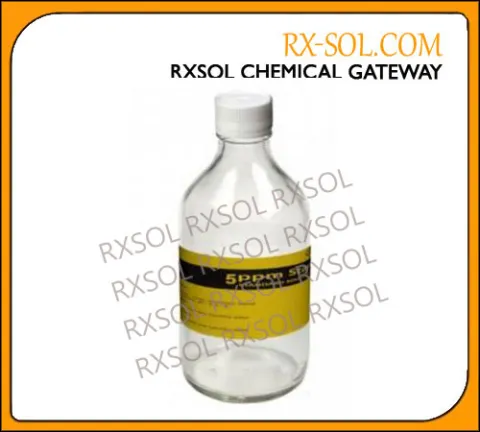
Wall Wash Kit Super
- Part number
- RXSOL-63-6105-001
- Category
- Wall Wash Test Kit
- Brand
- RXSOL
Overview
The RXSOL Wall Wash Test Kit is a complete test kit for performing a hydrocarbon test, PTT time test, chloride test, pH test, a acid wash color test and stainless steel passivation test.
The test kit consists of the following:
|
Lab Grade Methanol |
: |
10 Ltrs (2.5 ltr glass bottles X 4 Nos) |
|
Lab Grade D.I. Water |
: |
10 Ltrs (5 ltrs X 2 Nos) |
|
Pottasium permanganate |
: |
10 capsules |
|
Nitric Acid 20% Soln |
: |
(500 ml) |
|
Sulphuric Acid Concentrate |
: |
(500 ml) |
|
Hydrochlorid Acid Concentrate |
: |
(500 ml) |
|
Silver Nitrate |
: |
5% Solution (30 ml X 4 Btl) |
|
Chloride Standard Solution 10 ppm |
: |
500 ml (1 btl) |
|
pH Strips |
: |
range 0-14 (100 pcs) |
|
Cotton Wool |
: |
1 bundle |
|
Filter Paper– folded |
: |
100 pcs |
|
(Whatman)Latex Gloves |
: |
(100 pcs) |
|
Shoe Covers |
: |
(100 pcs) |
|
Squirt Bottles– 500 ml |
: |
2 pcs |
|
Thermometer |
: |
Range -10 to +110 deg C |
|
Penlight with batteries |
: |
1 pcs |
|
Glass sample bottles 500 ml |
: |
1 pcs |
|
Funnel |
: |
Round – 1 pcs |
|
Funnel Flat Sided (Stainless Steel) |
: |
1 Pcs |
|
Pipette |
: |
plastic 3ml (10 pcs) |
|
Nessler Tube |
: |
100 Ml (2 Pcs) |
|
Measuring Cylinders 50 ml |
: |
(2 pc) |
|
Nessler Tubes 50 ml |
: |
(2 pcs) |
|
Volumetric Flask 500 ml |
: |
1 pcs |
|
Pipette |
: |
glass 1ml |
|
Pipette |
: |
glass 5ml |
|
Pipette |
: |
glass 10ml |
The details are given completely free of undertaking. Since the application lies outside our control we can not accept any liability for the results.
Technical specifications
|
WALL WASH TEST KIT |
||
|
DESCRIPTION |
||
|
A) Chloride Test |
||
|
PH Paper |
: |
1 box |
|
Silver Nitrate SLN x 100ml |
: |
1 pc |
|
Pipette 5cc |
: |
1 pc |
|
Pipette 10cc |
: |
1 pc |
|
Chloride std pack 10.0ppm |
: |
1 bot |
|
Filter paper |
: |
1 box |
|
Cotton cloth 6"x 6" pack of 10 |
: |
1 pk |
|
Funnel plastic 65ml |
: |
2 pcs |
|
Nessler cylinder 100cc |
: |
3 pcs |
|
Deionised water Lab Grade x 2,5Ltrs |
: |
5 Ltrs |
|
Plastic Disposal Gloves |
: |
1 pkt |
|
B) Hydrocarbon test |
||
|
Deionised water lab grade x 2.5 ltrs |
: |
5 lts |
|
Nessler cylinder. 100cc |
: |
3 pcs |
|
Measuring cylinder 50cc |
: |
1 pcs |
|
Methanol lab grade x 2.5 ltrs |
: |
1 bot |
|
C) Acid wash color test |
||
|
Shaking cylinder |
: |
1 pc |
|
Sulfuric Acid Conc. X 500ml |
: |
1 bot |
|
D) Permanganate Time Test |
||
|
Potasalim permanganate 0.10g |
: |
5 amp |
|
Flask, Volumetric 500cc |
: |
1 pc |
|
Shaking cylinder 50cc |
: |
2 pc |
|
Deionised water lab grade x 2.5 ltrs |
: |
5 lts |
|
Color standard x 50cc |
: |
1 bot |
|
HCL acid conc. X 250cc |
: |
2 bot |
Applications
Dosage and directions
Wall Wash Kit full set provide complete set of reagent instrument which is required during after and before Tank Cleaning.
Safety and SDS
Read the safety data sheet before handling. Wear suitable gloves and eye protection.
View safety data sheet
PERMANGANATE TIME TEST
Scope:
This method serves as a means of detecting in alcohols or ketones the presence of impurities that reduce potassium permanganate. Applicable to methanol, ethanol, propanol, butanol, acetone, methyl ethyl ketone and methyl isobutyl ketone.
Summary of method:
Substances reacting with potassium permanganate in neutral solutions reduce it to manganese dioxyde, that colours the solution yellow. In the permanganate test the time required for the colour of test solution to change to that of a standard solution, ismeasured. The colour of the test solution changes from pink-orange to yellow-orange.
Apparatus :
Cylinders, glass-stoppered, 50 ml; Pipette, capable of delivering 2 ml of solution; Clock or stopwatch.
Reagents :
Potassium permanganate solution, 0,100 g of KMnO4 per 0,5 litre water; Uranyl nitrate - cobaltous chloride, standard solution. This standard solution represents the colour of the terminal point to which the samplesolution fades in the KMnO4 test. This solution is stable and should be kept in a 50 ml glass-stopperd cylinder, exactly the same as those in which the test is run.
Procedure :
Dissolve 0.100 g of sodium permanganate in distilled water in a volumetric flask of 500 ml and fill up to the mark. Clean a glass-stoppered 50 ml cylinder by 10 rinsings with tap water, 5 rinsings with distilled water and 3 rinsings with sample. Fill the cylinder with sample up to the 50 ml mark and put it into a constant temperature bath, maintained at 15oC. for methanol or at 25oC. for acetone. When the sample has reached the bath temperature (about 5 minutes), add 2 ml of potassium permanganate solution, using the 2 ml pipette. Stopper the tube, invert once to mix the contents and return it to the bath. Determine the time from addition of the potassium permanganate till the colour matches that of the standard solution. Protect the tube from light during this time. When you have finished the test, clean the sample cylinder twice with tap water and fill it with concentrated hydrochloric acid.
ACID WASH COLOUR OF AROMATIC HYDROCARBONS
Scope:
This method covers the determination of the acid wash colour of benzene, toluene, xylene,refined solvent naphta and similar aromatic hydrocarbons.
Definition :
Acid wash colour: The colour developed in the separated acid when a sample is agitated with sulphuric acid under the conditions described in this method.
Apparatus :
Acid wash colour standards, numbered 0 to 14; Shaking cylinders, 50 ml.
Procedure :
Fill a dry and clean 30 ml stoppered cylinder up to the 7 ml mark with sulphuric acid of the strength specified in Table 1 for the type of sample to be tested. Add sufficient sample to bring the total volume to the 28 ml mark. Insert the stopper, hold a finger over the stopper and give vigorous shakes with a stroke of 10 to 25 cm, shaking for a total of 150 cycles over a period of 40 to 50 seconds, that is at a rate of 3 to 3,75 cycles per second. Allow the cylinder to stand, protected from direct sunlight, for the period of time shown in
Table 1.
Without further delay invert the cylinder gently once or twice to obtain a uniform colour in the acid layer and compare the colour of the acid layer with those of the standards. Make the comparison against a white background or at daylight. Designate the colour of the acid layer by the number of the nearest matching standard andadd to the number a plus or minus sign if the sample is respectively darker or lighter than the standard colour.
Note: Concentrated sulphuric acid will cause severe burns on contact with the skin. When spil, remove with plenty of
water.
Remark: It is advisable, when performing the test, to use clean plastic disposable gloves.
CHLORIDE TEST
Principal :
The principal of the test is that chloride together with a silver nitrate solution gives a milky cloudy solution.
Apparatus :
Silver nitrate solution 5%; Chloride standard solution 1 mg chloride/ml; Distilled water;
1 Pipette 5 ml;
1 Pipette 10 ml;
2 Funnels;
3 Nessler tubes 100 ml;
Cottonwool;
Filter-paper.
Procedure :
1 m2 of the surface of a tank is washed with cottonwool drenched in distilled water. The distilled water in the cottonwool is transferred by squeezing out into a Nessler tube.The collected water is filtered off, using a funnel with filtering-paper which is placed on top of another Nessler tube. Thereafter the tube is filled up with distilled water to the 100 ml mark and 5 drops of a silver nitrate solution are added. The contents are mixed thoroughly. This is the test tube. Fill another Nessler tube with 1 ml of standard chloride solution, 99 ml of water and 5 drops of the silver nitrate solution. The contents are mixed thoroughly. This is the standard tube.The two solutions are compared. The chloride concentration in the standard Nessler tube is 10 ppm. When the turbidity of the test tube is less than the turbidity of the standard tube, the chloride content on 1 m2 surface of the tank is less than 1 mg. When the turbidity of the test solution in the test tube is more intensive than the the turbidity in the standard tube, the chloride content on 1 m2 surface of the tank is more than 1 mg. When the turbidity in both the tubes are more or less same, the chloride content on 1 m2 surface of the tank is 1 mg. Using the total surface and the cubic content of the tank, the chloride content which can be assimilated by methanol from the surface of the tank can be calculated.
Remark: It is advisable, when performing the test, to use clean plastic disposable gloves.
HYDROCARBON TEST FOR ALCOHOLS
Scope:
This method serves a means of detecting in alcohols the presence of hydrocarbons. As the surface of a tank or container used for shipping or storage of alcohols must be free of hydrocarbons this field-test was developed.
Summary of method :
The alcohol is mixed with distilled water. As hydrocarbons mixed with water give a milky cloudy solution, the solution of alcohol and distilled water will turn cloudy when hydrocarbons are present.
Apparatus :
3 Nessler tubes;
2 Measuring cylinders 50 ml;
Methanol, pure;
Distilled water.
Procedure :
1 m2of the surface of the tank is washed with cottonwool drenched in pure methanol. After each washing the methanol is squeezed out into a Nessler tube until 15 ml of methanol is collected.. 45 ml of distilled water is added to the methanol in the tube. The contents are mixed thoroughly. The solution must stands for 20 minutes after shaking. Another Nessler tube is filled with 60 ml of distilled water. This is called the ’blank’. When after the standing time the solution of methanol and distilled water is not as clear as the blank, or is cloudy, it showes that the surface of the tank is not free from hydrocarbons.
Remark: It is advisable, when performing the test, to use clean plastic disposable gloves.
Availability
Wall Wash Test Kit supplier in Mumbai JNPT, Kandla Gandhidham, Chennai Ennore, Visakhapatnam - Gangavaram, Kolkata - Haldia, Fujairah - DUBAI - Sharjah - Abu Dhabi.