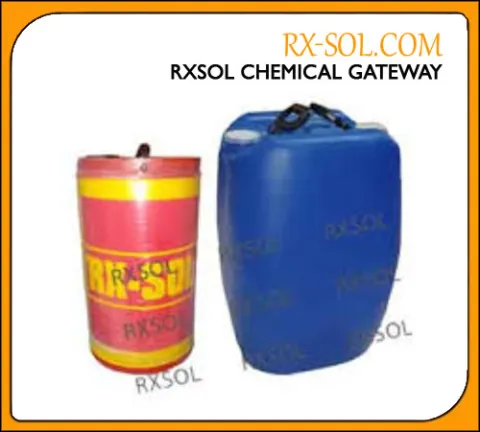
Concrete Natrium Hardener
- Part number
- RXSOL-67-6605-030
- Category
- Construction Chem
- Brand
- RXSOL
Overview
Sodium silicate solution, also known as water glass or liquid glass, is a colorless, viscous, alkaline solution made by reacting silica sand and sodium carbonate at high temperatures. It is a water-soluble inorganic sodium salt with the general formula Na₂O·xSiO₂. The solution is known for its adhesive, binding, and film-forming properties, making it useful in various applications such as adhesives, cements, detergents, and drilling fluids.
Technical specifications
TECHNICAL SPECIFICATION
- Appearance Colorless and opaque
- Density 1.36–1.47 grams per cubic centimeter, depending on composition
- pH 11–12.5 at 20°C
- Melting point 0°C
- Viscosity High, thick, and sticky, depending on concentration
- Solubility Fully soluble in water, but insoluble in alcohols and acids
- Hygroscopicity Absorbs moisture from the air
Applications
APPLICATION::
Industrial Applications:
- Detergents and Soaps: It acts as a binding agent and helps improve cleaning efficiency.
- Paper and Pulp: It's used in deinking processes and as a binder.
- Water Treatment: It functions as an iron flocculant and coagulant aid, and also helps with corrosion control and stabilization.
- Construction: Sodium silicate is used in cements, refractory materials, and as a binder for various construction components. It also acts as a sealer, waterproofing agent, and corrosion inhibitor.
- Foundry: It's used to create molds and cores in casting processes.
- Adhesives: It serves as a binder in various applications, including adhesives for paper and other materials.
- Refractory Applications: It's used in cements for high-temperature applications like stoves, furnaces, and chimneys.
- Timber Treatment: It can preserve wood from insects and offer some flame retardant properties.
- Soil Stabilization: It can be used to improve soil strength and load-bearing capacity.
- Automotive Repair: It's used to seal leaks in head gaskets and engine blocks.
Dosage and directions
Other Applications:
- Food Preservation: It's been used to preserve eggs and as a desiccant in food packaging.
- Ceramics: It's used as a deflocculant in slip preparation and can be applied to pottery for a hardened outer layer.
- Textiles: It's used in dyeing processes as a fixative and in textile manufacturing.
- Art Conservation: It's used in art restoration and preservation due to its adhesive and consolidating properties.
Characteristics and notes
PRECAUTION::
Personal Protective Equipment (PPE):
- Eye Protection: Wear chemical splash goggles or a face shield to prevent eye contact.
- Hand Protection: Wear chemical-resistant gloves, such as those made of polyvinyl chloride (PVC) or rubber.
- Skin and Body Protection: Wear appropriate protective clothing to prevent skin contact.
- Respiratory Protection: Use a respirator if there's a risk of inhaling dust, fumes, gas, mist, vapors, or spray.
Handling Precautions:
- Ventilation: Use sodium silicate solution only in a well-ventilated area or outdoors.
- Avoid Contact: Do not breathe dust, mist, or vapors.
- Cleanliness: Wash thoroughly with soap and water after handling, and wash contaminated clothing before reuse.
- Emergency Response:
Eye Contact:
- Rinse cautiously with water for several minutes, remove contact lenses if present and easy to do, and continue rinsing. Seek medical advice if irritation persists.
Skin Contact:
- Gently wash with plenty of soap and water. If irritation persists, seek medical advice.
Inhalation:
- Remove person to fresh air and keep comfortable for breathing. Immediately call a poison center or doctor.
Spills:
- Soak up spills with inert solids like clay or diatomaceous earth. Transfer to a container for disposal or recovery.
Fire:
- Avoid breathing fire gases or vapors. Evacuate the area and use water spray to cool containers.
Storage:
- Store in a tightly closed container, in a dry place, and keep out of reach of children.
- Environmental Precautions:
- Do not allow spills to enter drains, sewers, or watercourses.
- If spillage enters watercourses or sewers, notify the appropriate authorities.
Safety and SDS
Read the safety data sheet before handling. Wear suitable gloves and eye protection.
View safety data sheet
| Product Name | Concrete Natrium Hardener SOLUTION |
| Part Number | RXSOL-19-6605-030 |
Company Details:
RX MARINE INTERNATIONAL
105, A wing , BSEL , TECH PARK.
VASHI ,NEW BOMBAY 400703 INDIA
Branch : Kandla, Mumbai , Chennai, Vizag, Kolkata, UAE , OMAN , CANADA and KENYA
| Phone | +91 22 20871200 - 1400 |
| Fax | +91 22 27612100 :::AOH :0091 9821214367 |
| rxsolchemicals@gmail.com | |
| Website | www.rxmraine.com |
| Chemical Name | CAS | EC number | Weight |
| Sodium silicate solution | 1344-09-8 | 215-687-4 | <= 100 % |
| Signal Word | Danger |
| Hazard Statements | H290 May be corrosive to metals. H314 Causes severe skin burns and eye damage. H335 May cause respiratory irritation. |
| P280 Wear protective gloves.P305 + P351 + P338 | Wear eye protection/ face protection. IF IN EYES: Rinse cautiously with water for several minutes. Remove contact lenses, if present and easy to do. Continue rinsing. |
| Precautionary statements | P234 Keep only in original packaging. P261 Avoid breathing mist or vapors. P271 Use only outdoors or in a well-ventilated area. P280 Wear protective gloves/ protective clothing/ eye protection/ face protection. P303 + P361 + P353 IF ON SKIN (or hair): Take off immediately all contaminated clothing. Rinse skin with water. P305 + P351 + P338 IF IN EYES: Rinse cautiously with water for several minutes. Remove contact lenses, if present and easy to do. Continue rinsing. |
| Classification of the substance or mixture | Not a hazardous substance or mixture according to Regulation (EC) No 1272/2008. |
| Supplemental Hazard Statements | None |
| Other hazards | This substance/mixture contains no components considered to be either persistent, bioaccumulative and toxic (PBT), or very persistent and very bioaccumulative (vPvB) at levels of 0.1% or higher. |
| General advice | First aiders need to protect themselves. Show this material safety data sheet to the doctor in attendance. |
| If inhaled | After inhalation: fresh air. Call in physician. |
| Eye Contact | After eye contact: rinse out with plenty of water. Immediately call in ophthalmologist. Remove contact lenses. |
| Swallowed | After swallowing: make victim drink water (two glasses at most), avoid vomiting (risk of perforation). Call a physician immediately. Do not attempt to neutralise. |
| Skin Contact | In case of skin contact: Take off immediately all contaminated clothing. Rinse skin with water/ shower. Call a physician immediately. |
| Inhalation | Remove patient to fresh air, keep warm and at rest and get medical assistance in necessary. |
| Ingestion | Rinse mouth with water. Do not induce vomiting. Never give anything by mouth to an unconscious person. Call a doctor or Poison Control Center immediately. |
| Most important symptoms and effects, both acute and delaye | The most important known symptoms and effects are described in the labelling (see section 2.2) and/or in section 11 |
| Indication of any immediate medical attention and special treatment needed | No data available |
| Flammability | May be combustible at high temperature. |
| Suitable extinguishing media | Use extinguishing measures that are appropriate to local circumstances and the surrounding environment. |
| Unsuitable extinguishing media | For this substance/mixture no limitations of extinguishing agents are given. |
| Special hazards arising from the substance or mixture | Sodium oxides silicon oxides Not combustible. Ambient fire may liberate hazardous vapours. |
| Further information | Suppress (knock down) gases/vapors/mists with a water spray jet. Prevent fire extinguishing water from contaminating surface water or the ground water system. |
|
Hazardous combustion products |
Fire may cause the evolution of Sulphur oxides, nitrogen oxides. |
| Advice for firefighters | Stay in danger area only with self-contained breathing apparatus. Prevent skin contact by keeping a safe distance or by wearing suitable protective clothing. |
| Protective Equipment | Use personal protective equipment. |
| Specific Hazards Arising from the Chemical |
Has a fire-promoting effect due to the release of oxygen. Ambient fire may liberate hazardous vapours. |
| Personal precautions, protective equipment and emergency procedures | Advice for non-emergency personnel: Do not breathe vapors, aerosols. Avoid substance contact. Ensure adequate ventilation. Evacuate the danger area, observe emergency procedures, consult an expert. For personal protection see section 8. |
| Spillage | Oxidizing material. Stop leak if without risk. Avoid contact with a combustible material (wood, paper, oil, clothing...). Keep substance damp using water spray. Do not touch spilled material. Prevent entry into sewers, basements or confined areas dike if needed. Eliminate all ignition sources. Call for assistance on disposal. |
| Personal Protection | Advice for non-emergency personnel: Avoid inhalation of dusts. Evacuate the danger area, observe emergency procedures, consult an expert. Advice for emergency responders: Protective equipment see section 8. |
| Enviromental Precaution | Do not let product enter drains. |
|
Methods and materials for containment and cleaning |
Cover drains. Collect, bind, and pump off spills. Observe possible material restrictions (see sections 7 and 10). Take up with liquid-absorbent and neutralising material (e.g. Chemizorb® OH⁻, Merck Art. No. 101596). Dispose of properly. Clean up affected area. |
| Advice on protection against fire and explosion | Keep away from open flames, hot surfaces and sources of ignition.Take precautionary measures against static discharge. |
| Incompatible materials | Keep away from alkalis, strong oxidizing agents and metals. Provide containment walls of adequate capacity to hold any accidental spills. |
| Hygiene measures | Change contaminated clothing. Wash hands after working with substance. For precautions see section 2.2. |
| Precautions for safe handling | For precautions see section 2.2. |
| Conditions for safe storage, including any incompatibilities | Store the container tightly closed in a dry, cool and well-ventilated place. Store apart from foodstuff containers or incompatible materials. |
| Storage conditions | No metal containers. Tightly closed. |
| Storage class | Storage class (TRGS 510): 8B: Non-combustible, corrosive hazardous materials |
| Specific end use(s) | Apart from the uses mentioned in section 1.2 no other specific uses are stipulated |
| Advice on general occupational hygiene | Advice on safe handling Observe label precautions. Change contaminated clothing. Wash hands after working with substance. |
| Requirements for storage | Keep in cool and store under shade. |
| Exposure controls | No specific additional engineering controls are required. Provide good natural or artificial ventilation. |
| Engineering Control | Use process enclosures, local exhaust ventilation, or other engineering controls to keep airborne levels below recommended exposure limits. If user operations generate dust, fume or mist, use ventilation to keep exposure to airborne contaminants below the exposure limit. |
| Eye/face protection | Use equipment for eye protection tested and approved under appropriate government standards such as NIOSH (US) or EN 166(EU). Tightly fitting safety goggles |
| Body Protection | Protective clothing. |
| Skin protection | Handle with gloves. Gloves must be inspected prior to use. Use proper glove removal technique (without touching glove's outer surface) to avoid skin contact with this product. Dispose of contaminated gloves after use in accordance with applicable laws and good laboratory practices. Wash and dry hands. The selected protective gloves have to satisfy the specifications of Regulation (EU) 2016/425 and the standard EN 374 derived from it. Full contact Material: Nitrile rubber Minimum layer thickness: 0,11 mm Break through time: 480 min Material tested:Dermatril® (KCL 740 / Aldrich Z677272, Size M) Splash contact Material: Nitrile rubber Minimum layer thickness: 0,11 mm Break through time: 480 min Material tested:Dermatril® (KCL 740 / Aldrich Z677272, Size M) data source: KCL GmbH, D-36124 Eichenzell, phone +49 (0)6659 87300, e-mail sales@kcl.de, test method: EN374 If used in solution, or mixed with other substances, and under conditions which differ from EN 374, contact the supplier of the EC approved gloves. This recommendation is advisory only and must be evaluated by an industrial hygienist and safety officer familiar with the specific situation of anticipated use by our customers. It should not be construed as offering an approval for any specific use scenario. |
| Respiratory protection | Required when vapours/aerosols are generated. Our recommendations on filtering respiratory protection are based on the following standards: DIN EN 143, DIN 14387 and other accompanying standards relating to the used respiratory protection system. Recommended Filter type: Filter type ABEK The entrepeneur has to ensure that maintenance, cleaning and testing of respiratory protective devices are carried out according to the instructions of the producer. These measures have to be properly documented. |
| Other Protection Measure | Handle in accordance with good industrial hygiene and safety practice. |
| Control of environmental exposure | Prevent further leakage or spillage if safe to do so. Do not let product enter drains. |
| Thermal hazards | No data available |
Gloves Suit
| Physical state | Liquid |
| Colour | Colorless |
| Odour | No data available |
| Odor Threshold | Not Applicable |
| pH | 12,5 |
| Melting Point | No data available |
| Boiling Point | No data available |
| Flash Point | No data available |
| Evaporation Rate | Not Applicable |
| Flammability (solid, gas) | No data available |
| Explosive limits | No Data Available |
| Upper/lower flammability or explosive limits | No data available |
| Autoignition temperature | No data available |
| Decomposition temperature | No data available |
| Viscosity, dynamic | No data available |
| Vapour pressure | No data available |
| Density | 1,39 g/cm3 at 25 °C |
| Relative density | No data available |
| Relative Vapour Density | No data available |
| Freezing point | No data available |
| Specific Gravity | No data available |
| Partition coefficient | No data available |
| Explosive properties | No data available |
| Solubility | No data available |
| Ignition temperature | No information available. |
| Particle characteristics | No data available |
| Reactivity | No data available |
| Stability | The product is chemically stable under standard ambient conditions (room temperature) . |
| Possibility of hazardous reactions | No data available |
| Conditions to avoid | Heating. |
| Incompatible materials | No data available |
| Hazardous Polymerization | In the event of fire: see section 5 |
| Acute toxicity | LD50 Oral - Rat - male and female - 1.152 - 1.349 mg/kg Remarks: Gastrointestinal:Ulceration or bleeding from stomach. LC50 Inhalation - Rat - male and female - 4 h - > 2,06 mg/l - vapor (US-EPA) LD50 Dermal - Rat - male and female - > 5.000 mg/kg (US-EPA) |
| Skin corrosion/irritation | Skin - Rabbit Result: Corrosive - 4 h (OECD Test Guideline 404) |
| Serious eye damage/eye irritation | Remarks: Causes serious eye damage. |
| Respiratory or skin sensitization | Local lymph node assay (LLNA) - Mouse Result: negative (OECD Test Guideline 429) |
| Carcinogenicity | No data available |
| Germ cell mutagenicity | Test Type: Ames test Test system: Escherichia coli/Salmonella typhimurium Result: negative Test Type: Mutagenicity (mammal cell test): chromosome aberration. Test system: Chinese hamster lung cells Result: negative Test Type: In vitro mammalian cell gene mutation test Test system: Chinese hamster lung cells Result: negative Method: OECD Test Guideline 475 Species: Mouse - male - Bone marrow Result: negative |
| Reproductive toxicity | No data available |
| Specific target organ toxicity - single exposure | No data available |
| Special Remarks on other Toxi Effects on Humans | Acute Potential Health Effects: Skin: Causes skin irritation. May cause skin sensitization, an allergic reation, which becomes evident upon re-exposure to this material. Eyes: Causes eye irritation. Ingestion: Causes gastrointestinal (digestive) tract irritation with nausea, vomiting, and diarrhea. May be harmful if swallowed. Inhalation: Causes respiratory tract irritation. May cause chemical pneumonitis and pulmonary edema, inflammation, edema of bronchi and larynx. Chronic Potential Health Effects: Repeated or prolonged skin exposure may cause allergic reactions in sensitive individuals. Repeated or prolonged exposure by inhalation may affect respiration and metabolism. |
| Additional Information | The substance/mixture does not contain components considered to have endocrine disrupting properties according to REACH Article 57(f) or Commission Delegated regulation (EU) 2017/2100 or Commission Regulation (EU) 2018/605 at levels of 0.1% or higher. Other dangerous properties can not be excluded. Handle in accordance with good industrial hygiene and safety practice. |
| Persistence and degradability | Biodegradability Result: 66 % - Readily biodegradable. Remarks: (External MSDS) |
| Toxicity to fish | LC50 - Pimephales promelas (fathead minnow) - 4,4 mg/l - 96 h Remarks: (External MSDS) |
| Toxicity to daphnia and other aquatic invertebrates | Static test EC50 - Daphnia magna (Water flea) - 9 mg/l - 48 h (OECD Test Guideline 202) |
| Toxicity to algae | Static test ErC50 - Pseudokirchneriella subcapitata - > 22 mg/l - 72 h (OECD Test Guideline 201) |
| Products Biodegradation | The methods for determining the biological degradability are not applicable to inorganic substances. |
| Mobility in soil | No Information available |
| Results of PBT and vPvB assessment | This substance/mixture contains no components considered to be either persistent, bioaccumulative and toxic (PBT), or very persistent and very bioaccumulative (vPvB) at levels of 0.1% or higher. |
| Endocrine disrupting properties | The substance/mixture does not contain components considered to have endocrine disrupting properties according to REACH Article 57(f) or Commission Delegated regulation (EU) 2017/2100 or Commission Regulation (EU) 2018/605 at levels of 0.1% or higher. |
| Other adverse effects | No data available |
| Disposal methods | The material can be disposed of by removal to a licensed chemical destruction plant or by controlled incineration with flue gas scrubbing. Do not contaminate water, foodstuffs, feed or seed by storage or disposal. Do not discharge to sewer systems. |
| Contaminated packaging | Dispose of as unused product. |
| Waste treatment Method | See www.retrologistik.com for processes regarding the return of chemicals and containers, or contact us there if you have further questions. |
| UN number | ADR/RID: 3266 IMDG: 3266 IATA:3266 |
| UN proper shipping name |
ADR/RID:Corrosive liquid, basic, inorganic, n.o.s. (disodium metasilicate) IMDG:Corrosive liquid, basic, inorganic, n.o.s. (disodium metasilicate) IATA:Corrosive liquid, basic, inorganic, n.o.s. (disodium metasilicate) |
| Transport hazard class(es) | ADR/RID: 8 IMDG: 8 IATA: 8 |
| Packaging group | ADR/RID: III IMDG: III IATA: III |
| Environmental hazards | ADR/RID: No IMDG: No IATA: No |
| Special precautions for user | Tunnel restriction code : (C/E) |
| Further information | Not classified as dangerous in the meaning of transport regulations. |
| Transport in bulk according to IMOinstruments | No data available |
| Inventory status | Components are on the following inventories: Polymaleic acid: - US TSCA, Canadian DSL, EU EINECS, Australian AICS, Korean, Philippine PICCS and Chinese Xi irritant R 36/38 Irritant to eyes & skin R 41 Risk of serious damage to eyes S24/25 Avoid contact with skin and eyes S26/28 In case of contact eyes & skin, rinse with plenty water and seek medical advice Section 312/313: Not listed. Not listed under California proposition 65. |
| Safety, health and environmental regulations/legislation specific for the substance or mixture | This material safety data sheet complies with the requirements of Regulation (EC) No. 1907/2006. |
| Safety, health and environmental regulations specific for the product in question | European Inventory of Existing Commercial Chemical Substances (EINECS) -Listed.EC Inventory Listed. United States Toxic Substances Control Act (TSCA) Inventory- Listed. China Catalog of Hazardous chemicals 2015 Not- Listed. New Zealand Inventory of Chemicals (NZIoC)Listed. PICCS -Listed. Vietnam National Chemical Inventory -Listed. IECSC Listed. Korea Existing Chemicals List (KECL) -Listed. |
| National legislation | Seveso III: Directive 2012/18/EU of the European Parliament and of the Council on the control of major-accident hazards involving dangerous substances. : ENVIRONMENTAL HAZARDS : FLAMMABLE LIQUIDS |
| Other regulations | Take note of Dir 94/33/EC on the protection of young people at work. |
| Chemical Safety Assessment | For this product a chemical safety assessment was not carried out |
| Other Information |
The information above is believed to be accurate and represents the best information currently available to us. However, we make no warranty of merchantability or any other warranty, express or implied, with respect to such information, and weassume no liability resulting from its use. Users should make their own investigations to determine the suitability of the information for their particular purposes. In no event shall be liable for any claims, losses, or damages of any third party or for lost profits or any special, indirect, incidental, consequential or exemplary damages, howsoever arising, even if Rx Marine International has been advised of the possibility of such damages. DISCLAIMER OF LIABILITY :The information in this SDS was obtained from sources which we believe are reliable. However, the information is provided without any warranty, express or implied, regarding its correctness. The conditions or methods of handling, storage, use or disposal of the product are beyond our control and may be beyond our knowledge. For this and other reasons, we do not assume responsibility and expressly disclaim liability for loss, damage or expense arising out of or in any way connected with the handling, storage, use or disposal of the product. This MSDS was prepared and is to be used only for this product. If the product is used as a component in another product, this MSDS information may not be applicable. |