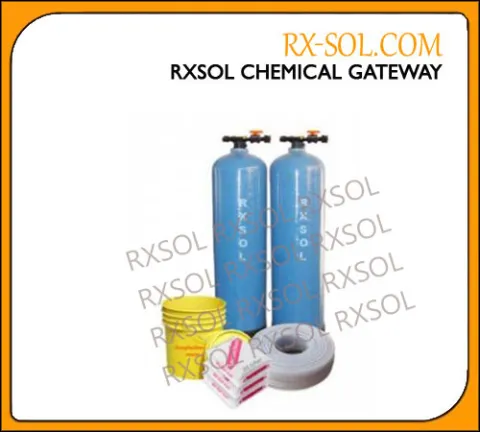
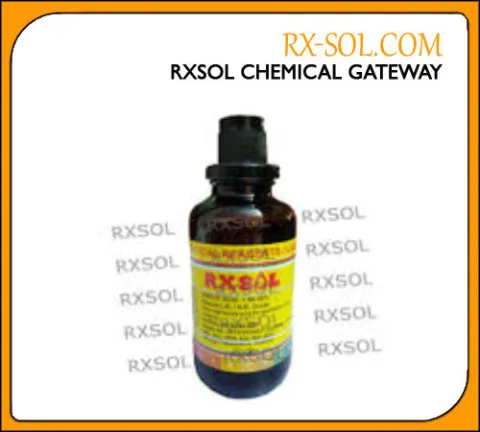
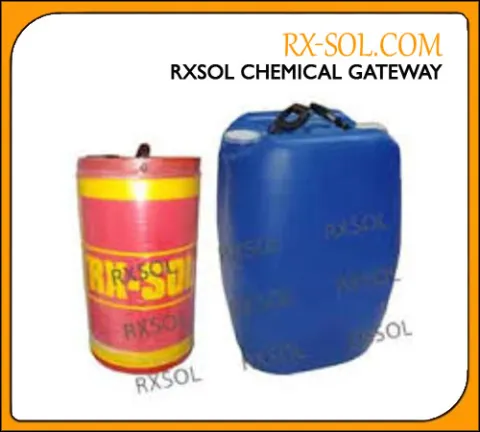
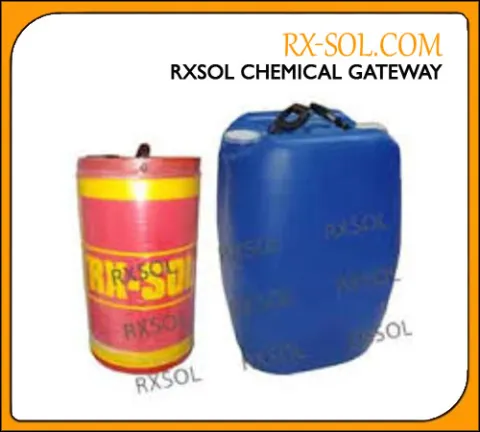
Water Filter, Vessel, Softner, Accessory
Calcium chloride dihydrate
- Part number
- RXSOL-19-2109-050
- Brand
- RXSOL
Overview
Calcium chloride dihydrate is a white to off-white crystalline solid with the chemical formula CaCl2.2H2O. It's a hydrate, calcium salt, and inorganic chloride that's highly soluble in water.
Technical specifications
PHYSICAL PROPERTIES
| Chemical formula | CaCl2.2H2O |
| Molecular mass | 147.014 g/mol |
| Color | White to grayish solid |
| Melting point | 176°C |
| Density | 1.85 g/cm3 |
| Solubility | Highly soluble in water |
Applications
APPLICATION
- De-icing agent
- Drying agent
- Food additive
- Concrete accelerator
- Drilling fluid additive
- pH buffer in swimming pool water
- Inhibitor of swelling clays in invert emulsion drilling fluids
- Flux in the Davy process for the manufacture of sodium
- Additive in plastics, fire extinguishers, and blast furnaces
- Drainage aid in wastewater treatment
Characteristics and notes
USES
- De-icing: Melts ice and snow on roads, sidewalks, and parking lots
- Drying: Absorbs moisture and humidity from the air to prevent corrosion and degradation
- Food additive: Used as a firming agent, stabilizer, and thickener in foods like canned vegetables, pickles, and cheese
- Concrete accelerator: Speeds up the setting and hardening of concrete, especially in cold weather
- Drilling fluid additive: Increases the density and controls the viscosity of drilling fluids
- Plant nutrient: Used to postpone aging, prevent decay, increase firmness, and limit physiological problems in plants and developing fruit
- pH buffer: Used in swimming pool water
- Inhibiting swelling clays: Used in the water phase of invert emulsion drilling fluids
- Increasing brine density: Used in the oil industry to increase the density of solids-free brines
- Flux: Used in the Davy process for the manufacture of sodium
- Additive in plastics, fire extinguishers, and blast furnaces: Used in these products
- Drainage aid: Used in wastewater treatment
Safety and SDS
Read the safety data sheet before handling. Wear suitable gloves and eye protection.
View safety data sheet
| Product Name | Calcium chloride dihydrate |
| Part Number | RXSOL-19-2109-050 |
Company Details:
RX MARINE INTERNATIONAL
105, A wing , BSEL , TECH PARK.
VASHI ,NEW BOMBAY 400703 INDIA
Branch : Kandla, Mumbai , Chennai, Vizag, Kolkata, UAE , OMAN , CANADA and KENYA
| Phone | +91 22 20871200 - 1400 |
| Fax | +91 22 27612100 :::AOH :0091 9821214367 |
| rxsolchemicals@gmail.com | |
| Website | www.rxmraine.comA |
| Chemical Name | CAS No | Weight |
| Calcium chloride, dihydrate | 10035-04-8 | >95 |
| Calcium chloride | 10043-52-4 | - |
| Classification | This chemical is considered hazardous by the 2012 OSHA Hazard Communication Standard (29 CFR 1910.1200) |
| Label Elements | |
| Signal Word | Warning |
| Hazard Statements | Causes serious eye irritation |
| Precautionary Statements |
Prevention
Wash face, hands and any exposed skin thoroughly after handling
Wear eye/face protection
Eyes
IF IN EYES: Rinse cautiously with water for several minutes. Remove contact lenses, if present and easy to do. Continue rinsing If eye irritation persists: Get medical advice/attention
|
| Hazards not otherwise classified (HNOC) | None identified |
| Eye Contact | Rinse immediately with plenty of water, also under the eyelids, for at least 15 minutes. Getmedical attention. |
| Skin Contact | Wash off immediately with plenty of water for at least 15 minutes. Get medical attention. |
| Inhalation | Remove to fresh air. Do not use mouth-to-mouth method if victim ingested or inhaledthesubstance; give artificial respiration with the aid of a pocket mask equipped withaone-wayvalve or other proper respiratory medical device. Get medical attention. If not breathing, give artificial respiration. |
| Ingestion | Do NOT induce vomiting. Get medical attention. |
| Most important symptoms and effects | No information available |
| Notes to Physician | Treat symptomatically |
| Suitable extinguishing media | Substance is nonflammable; use agent most appropriate to extinguish surrounding fire. |
| Unsuitable extinguishing media | No information available |
| Flash Point | No information available |
| Method | No information available |
| Autoignition Temperature | No information available |
| Explosion Limits | |
| Upper | No data available |
| Lower | No data available |
| Sensitivity to Mechanical Impact | No information available |
| Sensitivity to Static Discharge | No information available |
| Specific Hazards Arising from the Chemical | Non-combustible, substance itself does not burn but may decompose upon heating to produce corrosive and/or toxic fumes. |
| Hazardous Combustion Products | Hydrogen chloride gas. |
| Protective Equipment and Precautions for Firefighters | As in any fire, wear self-contained breathing apparatus pressure-demand, MSHA/NIOSH (approved or equivalent) andfull protective gear. |
| Personal precautions | Ensure adequate ventilation. Use personal protective equipment as required. Avoiddust formation |
| Environmental Precautions | Should not be released into the environment. See Section 12 for additional Ecological Information. |
| Methods for Containment and Clean Up | Sweep up and shovel into suitable containers for disposal. Avoid dust formation. |
| Handling | Wear personal protective equipment/face protection. Ensure adequate ventilation. Donot get in eyes, on skin, or on clothing. Avoid ingestion and inhalation. Avoid dust formation. Wash hands before breaks and immediately after handling the product. |
| Storage | Keep containers tightly closed in a dry, cool and well-ventilated place. IncompatibleMaterials. Strong oxidizing agents. |
| Exposure Guidelines | |
| Engineering Measures | Ensure that eyewash stations and safety showers are close to the workstationlocation. Ensure adequate ventilation, especially in confined areas. |
| Personal Protective Equipment | |
| Eye/face Protection | Wear appropriate protective eyeglasses or chemical safety goggles as describedbyOSHA's eye and face protection regulations in 29 CFR 1910.133 or EuropeanStandardEN166. |
| Skin and body protection | Wear appropriate protective gloves and clothing to prevent skin exposure |
| Respiratory Protection | No protective equipment is needed under normal use conditions. |
| Recommended Filter type | Particle filter. |
| Hygiene Measures | Handle in accordance with good industrial hygiene and safety practice. |
| Physical state | Solid |
| Appearance | Beige - White |
| Odor | Odorless |
| Odor Threshold | No informaion available |
| pH | 4.5-6.5 100 g/l aq. sol |
| Melting Point/Range | 175 °C / 347 °F |
| Boiling Point/Range | No information available |
| Flash Point | No information available |
| Evaporation Rate | Not applicable |
| Flammability (solid,gas) | No information available |
| Flammability or explosive limits | |
| Upper | No data available |
| Lower | No data available |
| Vapor Pressure | No information available |
| Vapor Density | Not applicable |
| Specific Gravity | 0.830 |
| Solubility | 1000 g/L @ 0 °C |
| Partition coefficient; n-octanol/water | No data available |
| Autoignition Temperature | No information available |
| Decomposition Temperature | No information available |
| Viscosity | Not applicable |
| Molecular Formula | Ca Cl2 . 2 H2 O |
| Molecular Weight | 147.02 |
| Reactive Hazard | None known, based on information available |
| Stability | Hygroscopic. |
| Conditions to avoid | Incompatible products. Excess heat. Avoid dust formation. Exposure to moist air or water. |
| Incompatible materials | Strong oxidizing agents |
| Hazardous Decomposition Products | Hydrogen chloride gas |
| Hazardous Polymerization | Hazardous polymerization does not occur. |
| Hazardous Reactions | None under normal processing |
Acute Toxicity
| Component | LD50 Oral | LD50 Dermal | LC50 Inhalation |
| Calcium chloride | 2301 mg/kg ( Rat ) | LD50 > 5000 mg/kg ( Rabbit ) | Not listed |
Delayed and immediate effects as well as chronic effects from short and long-term exposure
| Irritation | Irritating to eyes |
| Sensitization | No information available |
| Carcinogenicity | The table below indicates whether each agency has listed any ingredient as acarcinogen. |
| Component | CAS No | IARC | NTP | ACGIH | OSHA | Mexico |
| Calcium chloride, dihydrate | 10035-04-8 | Not listed | Not listed | Not listed | Not listed | Not listed |
| Calcium chloride | 10043-52-4 | Not listed | Not listed | Not listed | Not listed | Not listed |
| Mutagenic Effects | No information available |
| Reproductive Effects | No information available |
| Developmental Effects | No information available |
| Teratogenicity | No information available |
| STOT - single exposure | None known |
| STOT - repeated exposure | None known |
| Aspiration hazard | No information available |
| Symptoms / effects,both acute and delayed | No information available |
| Endocrine Disruptor Information | No information available |
| Other Adverse Effects | The toxicological properties have not been fully investigated. |
| Ecotoxicity | Do not empty into drains. |
| Component | Freshwater Algae | Freshwater Fish | Microtox | Water Flea |
| Calcium chloride, dihydrate | - |
Lepomis macrochirus: LC50:
10650 mg/L/96h
|
- | EC50: 3005 mg/L/48h |
| Calcium chloride | Not listed |
Lepomis macrochirus: LC50:
10650 mg/L/96h
|
Not listed | EC50: 52 mg/L/48h |
| Persistence and Degradability | Soluble in water Persistence is unlikely based on information available. |
| Bioaccumulation/ Accumulation | No information available |
| Mobility | Will likely be mobile in the environment due to its water solubility. |
| Component | log Pow |
| Calcium chloride, dihydrate | 0.05 |
| Waste Disposal Methods | Chemical waste generators must determine whether a discarded chemical is classifiedasahazardous waste. Chemical waste generators must also consult local, regional, andnational hazardous waste regulations to ensure complete and accurate classification |
| DOT | Not regulated |
| TDG | Not regulated |
| IATA | Not regulated |
| IMDG/IMO | Not regulated |
United States of America Inventory
| Component | CAS No | TSCA |
TSCA Inventory notification -
Active-Inactive
|
TSCA - EPA RegulatoryFlags |
| Calcium chloride, dihydrate | 10035-04-8 | X | - | - |
| Calcium chloride | 10043-52-4 | - | ACTIVE | - |
| International Inventories | Canada (DSL/NDSL), Europe (EINECS/ELINCS/NLP), Philippines (PICCS), Japan (ENCS), Japan (ISHL), Australia (AICS), China (IECSC), Korea(KECL). |
| Component | CAS No | DSL | NDSL | EINECS | PICCS | ENCS | ISHL | AICS | IECSC | KECL |
| Calcium chloride, dihydrate | 10035-04-8 | - | - | - | X | X | X | X | X | - |
| Calcium chloride | 10043-52-4 | X | - | 233-140-8 | X | X | X | X | X | KE-04496 |
U.S. Federal Regulations
| SARA 313 | Not applicable |
| SARA 311/312 Hazard Categories | See section 2 for more information |
| CWA (Clean Water Act) | Not applicable |
| Clean Air Act | Not applicable |
| OSHA - Occupational Safety and Health Administration | Not applicable |
| CERCLA | Not applicable |
| California Proposition 65 | This product does not contain any Proposition 65 chemicals. |
|
U.S. State Right-to-Know
Regulations
|
Not applicable |
| U.S. Department of Transportation | |
| Reportable Quantity (RQ): | N |
| DOT Marine Pollutant | N |
| DOT Severe Marine Pollutant | N |
| U.S. Department of Homeland Security | This product does not contain any DHS chemicals. |
| Other International Regulations | |
| Mexico - Grade | No information available |
Safety, health and environmental regulations/legislation specific for the substance or mixture
| Component | CAS No | OECD HPV |
Persistent Organic
Pollutant
|
Ozone Depletion
Potential
|
Restriction of
Hazardous Substances (RoHS)
|
| Calcium chloride, dihydrate | 10035-04-8 | Not applicable | Not applicable | Not applicable | Not applicable |
| Calcium chloride | 10043-52-4 | Listed | Not applicable | Not applicable | Not applicable |
Other International Regulations
| Component | CAS No |
Seveso III Directive
(2012/18/EC) -
Qualifying Quantities
for Major Accident Notification
|
SevesoIII Directive
(2012/18/EC) -
Qualifying Quantities
for Safety Report
Requirements
|
Rotterdam
Convention (PIC)
|
Basel Convention
(Hazardous Waste)
|
| Calcium chloride, dihydrate | 10035-04-8 | Not applicable | Not applicable | Not applicable | Not applicable |
| Calcium chloride | 10043-52-4 | Not applicable | Not applicable | Not applicable | Not applicable |
| Other Information |
The information above is believed to be accurate and represents the best information currently available to us. However, we make no warranty of merchantability or any other warranty, express or implied, with respect to such information, and weassume no liability resulting from its use. Users should make their own investigations to determine the suitability of the information for their particular purposes. In no event shall be liable for any claims, losses, or damages of any third party or for lost profits or any special, indirect, incidental, consequential or exemplary damages, howsoever arising, even if Rx Marine International has been advised of the possibility of such damages. DISCLAIMER OF LIABILITY :The information in this SDS was obtained from sources which we believe are reliable. However, the information is provided without any warranty, express or implied, regarding its correctness. The conditions or methods of handling, storage, use or disposal of the product are beyond our control and may be beyond our knowledge. For this and other reasons, we do not assume responsibility and expressly disclaim liability for loss, damage or expense arising out of or in any way connected with the handling, storage, use or disposal of the product. This MSDS was prepared and is to be used only for this product. If the product is used as a component in another product, this MSDS information may not be applicable. |