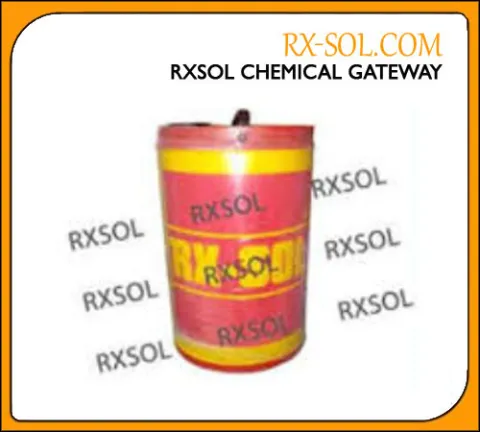
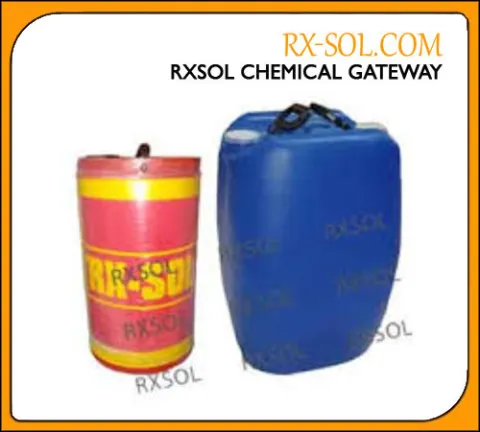
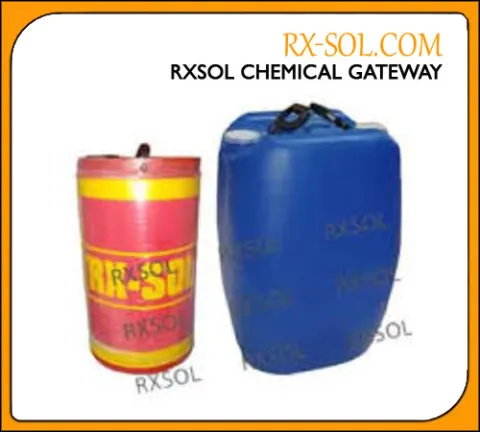
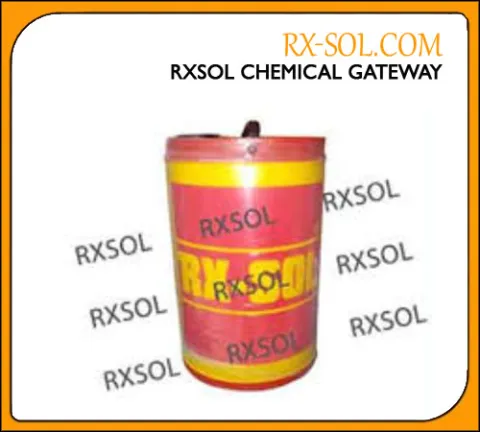
HEDP 60%
- Part number
- RXSOL-81-8160-250
- Category
- Cooling Water Chemical
- Brand
- RXSOL
Overview
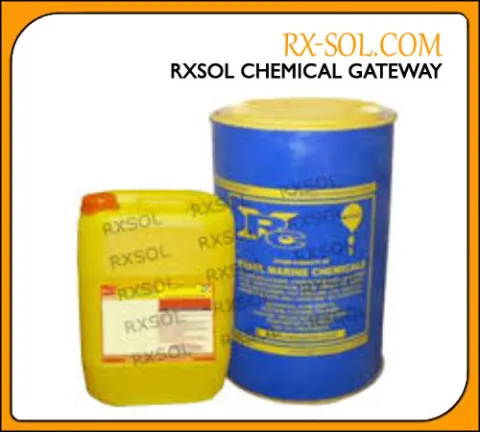
HEDP ACID chemical name is Hydroxy Ethylidene -1,1-Diphosphonic acid manufacturer, supplier and exporter. HEDP is organophosphonate compound which have chemical properties of sequestration, deflocculation, threshold inhibition and hydrolytic stability etc. HEDP is an organophosphoric acid corrosion inhibitor. It can chelate with Fe, Cu, and Zn ions to form stable chelating compounds. It can dissolve the oxidized materials on these metals’ surfaces.
Technical specifications
| Chemical Name | 1 Hydroxy ethylidene 1,1-diphosphonic Acid or HEDP 60% Synonyms : 1-Hydroxyethylidene-1,1- Diphosphonic Acid |
|---|---|
| CAS No | 809-21-4 |
| Molecular Weight | / Molecular Formula : C2H8O7P |
| Appearance | Clear / pale yellow Solution |
| Active Content | + 2% |
| Specific gravity @ 25°C | 1.42 –1.4 |
| pH (1% solution) | Less than |
| Chlorides as HCl | < 0.01 % |
| Phosphorous acid | < 2.5 % |
| Acetic acid | < 0.5 % |
| Iron Content (ppm) | < |
| Solubility | Soluble in water |
| Assay | % |
| Chelation Value | 5 |
Applications
Dosage and directions
Characteristics and notes
Storage for ten months in room shady and dry place. Safety Protection: Acidity, Avoid contact with eye and skin, once contacted, flush with water.
Safety and SDS
Read the safety data sheet before handling. Wear suitable gloves and eye protection.
View safety data sheet
| Product Name | HEDP 60% |
| Product Type | RXSOL-81-8160-250 |
Company Details:
RX MARINE INTERNATIONAL
105, A wing , BSEL , TECH PARK.
VASHI ,NEW BOMBAY 400703 INDIA
Stock Point : Mumbai, Kandla, Kolkata, Chennai, Visakhapatnam, Fujairah
| Phone | +91 22 27815541 / 42 |
| Fax | +91 22 2781 1318 :::AOH :0091 9821214367 |
| rxsolchemicals@gmail.com |
| Chemical | % |
TWAEV / TLV ppm / mg/m3 |
LD50 ORAL |
(mg/kg) SKIN |
LC50 ppm INHALATION |
| HEDP | 58-62% | Not listed | 2400 | >7940 | not known |
| Canada – WHMIS Key: |
D 2B, E |
| U.S.A. – HMIS Key: |
Health – 2, Fire – 0, Reactivity – 1 0=minimal, 1=slight, 2=moderate, 3=serious, 4=severe |
3. (b) HAZARDS – TOXICITY:
Effects, Acute Exposure:
| Skin Contact | Irritating, may be corrosive if not removed promptly |
| Skin Absorption | Slight; no toxic effects likely by this route |
| Eye Contact | Irritating, may be corrosive if not removed promptly |
| Inhalation | Product mist is irritating; prolonged exposure may be corrosive to respiratory tract |
| Ingestion | Irritating to mouth, throat & stomach – not a route of industrial exposure |
Effects, Chronic Exposure:
| General | Chronic ingestion of HEDP binds to bone, reducing mineralization of bone in adult beagles & in young rats giving rise to less calcium (& presumably strength) in bone |
| Sensitising | Not a sensitiser in humans or animals |
| Carcinogen/Tumorigen | Not considered a tumorigen or a carcinogen in humans or animals |
| Reproductive Effect | Reduced fertility in rats on prolonged ingestion; no known effect in humans |
| Mutagen | No known effect on humans or animals; some mutagenic effect observed in onion & barley root tips – significance of this to human health is not known |
| Synergistic With | Not known |
| LD50 (oral) | 2400, 3130 & 3550mg/kg (rat) |
| LD50 (skin) | >7940mg/kg (rabbit), >10,000mg/kg (rabbit) |
| LC50 (inhalation) | Not known |
| SKIN: | Wash with plenty of water. Remove contaminated clothing and do not reuse until thoroughly laundered. |
| EYES: | Wash eyes with plenty of water, holding eyelids open. Seek medical assistance promptly if there is irritation. |
| INHALATION: | Remove from contaminated area promptly. CAUTION: Rescuer must not endanger himself! If breathing stops, administer artificial respiration and seek medical aid promptly. |
| INGESTION: | Give plenty of water to dilute product, or milk if available to neutralise it. Do not induce vomiting (NOTE below). Keep victim quiet. If vomiting occurs, lower victim’s head below hips to prevent inhalation of vomited material. Seek medical help promptly. |
| Inadvertent inhalation of vomited material may seriously damage the lungs. The danger of this is greater than the risk of poisoning through absorption of this relatively low-toxicity substance. The stomach should only be emptied under medical supervision, and after the installation of an airway to protect the lungs. |
| Flash Point | Not known – will not flash |
| Autoignition Temperature | Not known – will not burn |
| Flammable Limits | Not known – will not burn |
| Combustion Products | Nitrogen oxides, phosphorous oxides |
| Firefighting Precautions | As for materials sustaining fire; firefighters must wear SCBA |
| Static Charge Accumulation | Cannot accumulate a static charge on agitation or pumping |
| Leak Precaution dyke to control spillage and prevent environmental contamination Handling Spill ventilate contaminated area; recover free liquid with suitable corrosion resistant pumps; absorb residue on an inert sorbent, sweep, shovel, & store in closed containers for recycling or disposal |
|
above 0oC / 32oF. Do not use steel containers. Suitable containers include polyethylene, polypropylene, fibreglass, glass-lined steel and polyvinyl chloride. Do not use copper or brass plumbing or valves. Ensure that containers, whether empty or full, or part full, are tightly sealed unless in use. Avoid creating or breathing product mist. Use with adequate exhaust ventilation if a mist is created. Never cut, drill, weld or grind on or near this container. Avoid all contact with skin and wash work clothes frequently. An eye bath and safety shower must be available near the workplace. |
| ACGIH TLV | Not listed |
| OSHA PEL | Not listed |
| STEL | Not listed |
| Ventilation | No special mechanical ventilation required |
| Hands | Nitrile gloves recommended – other types may also protect; consult supplier to confirm suitability |
| Eyes | Safety glasses with side shields; a face shield is also recommended – always protect the eyes |
| Clothing | Wear impermeable (above) apron, boots, & long sleeves if there is any danger of splashing, |
| Odour & Appearance | Clear, colourless or yellowish liquid with slight odour |
| Odour Threshold | Not known |
| Vapour Pressure | 17.5mmHg / 2.3kPa (20oC / 68oF) – only water vapour present |
| Evaporation Rate (Butyl Acetate = 1) | As for water |
| Vapour Density (air = 1) | 0.6 – only water vapour present |
| Boiling Range | 108oC / 226oF |
| Freezing Point | <0oC / <32oF |
| Specific Gravity | 1.44 (20/20oC) |
| Water Solubility | Complete |
| Also soluble in | Methanol, ethylene glycol – probably other polar solvents |
| Viscosity | Not known |
| pH | <2 |
| Molecular Weight | 206grams per mole |
| Dangerously Reactive With | Strong oxidising agents, strong reducing agents, strong alkalis, amines |
| Also Reactive With | Corrodes some base metals; releases toxic gases in contact with metal sulphides & sulphites |
| Stability | Stable; will not polymerize |
| Decomposes in Presence of | Not known |
| Decomposition Products | None apart from Hazardous Combustion Products |
| Sensitive to Mechanical Impact | No |
| Canada DSL | On inventory |
| U.S.A. TSCA | On inventory |
| Europe EINECS | On inventory |
| China IECS | On inventory |
| Europe Risk Phrases | R: 22, 36, 38 – harmful if swallowed, irritating to eyes, irritating to skin |
| Europe Safety Phrases | S: 13, 24-26, 36, 46 – keep away from food, drink and animal feed, avoid contact with skin, avoid contact with eyes, in case of contact with eyes, rinse immediately & seek medical advice, wear suitable protective clothing, if swallowed, seek medical advice immediately |
| Bioaccumulation | This product is not a bioaccumulator |
| Biodegradation | HEDP degrades in the presence of oxygen at a wide range of rates – 0% - 48% in 28 days (a dozen test reports) In Europe, considered to be “readily biodegradeable” |
| Abiotic Degradation | 12-17% in 11 days degradation by direct photolysis |
| Mobility in soil, water | This product is water soluble and will move readily in soil and water |
Aquatic Toxicity:
| LC50 (Fish, 96hr) | 2180mg/litre (Pimephelas promelas & Cyprinodon variegatus), 200-368mg/litre (Salmo gairdneri),695mg/litre (Ictalurus punctatus), 868mg/litre (Lepomis macrochirus), 207 & 350mg/l (Leuciscus idus) |
| EC50 (Crustacea, 24hr) | 527mg/litre (Daphnia magna), 1770mg/litre (Palaemonetes pugio) |
| EC50 (Algae) | 39mg/litre (Selenastrum capricornutum) |
| Waste Disposal | Do not flush to sewer, recycle if possible, biodegradation in approved facility with bacterial sludge of “proven effectiveness” (see Part 12, below) for HEDP is preferred |
| Containers |
Drums should be reused. Recondition and pressure test by a licensed reconditioner prior to re-use. Pails must be vented and thoroughly dried prior to crushing and recycling. IBCs (intermediate bulk containers): polyethylene bottle must be pressure tested & recertified at 30 months. Replace at 60 months (5yrs). Steel containers must be inspected, pressure tested & recertified every 5 years. Never cut, drill, weld or grind on or near this container, even if empty |
|
Canada TDG AND U.S.A. 49 CFR |
PIN | UN-3265 |
| Shipping Name | corrosive liquid, acidic, N.O.S. (1hydroxyethanediphosphonic acid) | |
| Class | 8 | |
| Packing Group | III |
Marine Pollutant not a marine pollutant
No informtion Available
|
The data given here is based on current knowledge and experience. This Safety Data Sheet describes the product in terms of safety requirements and does not signify any warranty with regard to the product's properties The data given here only applies when product used for proper application(s). The product is not sold as suitable for other applications usage in such may cause risks not mentioned in this sheet. Do not use for other application(s) without seeking advice from manufacturer. DISCLAIMER OF LIABILITY :The information in this SDS was obtained from sources which we believe are reliable. However, the information is provided without any warranty, express or implied, regarding its correctness. The conditions or methods of handling, storage, use or disposal of the product are beyond our control and may be beyond our knowledge. For this and other reasons, we do not assume responsibility and expressly disclaim liability for loss, damage or expense arising out of or in any way connected with the handling, storage, use or disposal of the product. This MSDS was prepared and is to be used only for this product. If the product is used as a component in another product, this MSDS information may not be applicable. |
Availability
Etidronic acid / HEDP supplier and Exporter in Mumbai, Kandla, Kolkata, Chennai, Visakhapatnam, Fujairah, Dubai, Sharjah, Abu Dhabi, Ajman.