SODIUM PER CARBONATE TABLET
- Part number
- RXSOL-60-6605-550
- Category
- Medicine
- Brand
- RXSOL
Overview
It is used as an antacid to treat heartburn, indigestion, and upset stomach. Sodium bicarbonate is a very quick-acting antacid. It should be used only for temporary relief. If you need to treat long-term stomach acid problems (such as peptic ulcer disease, GERD), talk with your doctor about other medications.
Applications
With topical application, sodium perborate is converted by catalase to water, oxygen, and hydrogen peroxide. Its antimicrobial properties are attributed to oxidization of cell membranes, membrane-bound enzymes, and disruption of protein synthesis.
Dosage and directions
Characteristics and notes
In the industry, sodium perborate is used as a disinfectant. It is also part of the ingredients for detergents, bleach powders, and personal care formulations. In cosmetic products, perboric acid and mainly its salt are used as an oxidizing agent for dyeing or permanent waving.
Safety and SDS
Read the safety data sheet before handling. Wear suitable gloves and eye protection.
View safety data sheet
| Product Name | SSODIUM PER CARBONATE TABLET |
| Part Number | RXSOL-60-6605-550 |
Company Details:
RX MARINE INTERNATIONAL
105, A wing , BSEL , TECH PARK.
VASHI ,NEW BOMBAY 400703 INDIA
Branch : Kandla, Mumbai , Chennai, Vizag, Kolkata, UAE , OMAN , CANADA and KENYA
| Phone | +91 22 20871200 - 1400 |
| Fax | +91 22 27612100 :::AOH :0091 9821214367 |
| rxsolchemicals@gmail.com | |
| Website | www.rxmraine.com |
| Chemical Name | CAS | EC number | Weight |
| SODIUM PER CARBONATE TABLET | 497-19-8 | 207-838-8 | 90% |
| Signal Word | WARNING |
| Hazard statement(s) |
H319: Causes serious eye irritation. |
| Precautionary statement(s) | P264: Wash hands and exposed skin thoroughly after handling. P280: Wear protective gloves/protective clothing/eye protection/face protection. P305+P351+P338: IF IN EYES: Rinse cautiously with water for several minutes. Remove contact lenses, if present and easy to do. Continue rinsing. P337+P313: If eye irritation persists: Get medical advice/attention. |
| Supplemental information | None assigned |
| Other hazards | None known |
| Description of first aid measures | Self-protection of the first aider Use personal protective equipment as required. Wear appropriate personal protective equipment, avoid direct contact. Ensure adequate ventilation. Avoid contact with eyes. Contaminated clothing should be laundered before reuse. Avoid breathing vapours. Inhalation IF INHALED: If breathing is difficult, remove victim to fresh air and keep at rest in a position comfortable for breathing. Skin contact IF ON SKIN: Gently wash with plenty of soap and water. If irritation develops and persists, get medical attention. Eye contact IF IN EYES: Rinse cautiously with water for several minutes. Remove contact lenses, if present and easy to do. Continue rinsing. If eye irritation persists, get medical advice/attention. Ingestion IF SWALLOWED: Rinse mouth. Give plenty of water to drink. Do NOT induce vomiting. If you feel unwell, seek medical advice (show the label where possible). |
| Most important symptoms and effects, both acute and delayed | Causes serious eye irritation.. |
| Indication of any immediate medical attention and special treatment needed |
Treat symptomatically. |
| Suitable extinguishing media | As appropriate for surrounding fire |
| Unsuitable extinguishing media | Do not use water jet. Direct water jet may spread the fire. |
| Special hazards arising from the substance or mixture | Not flammable |
| Advice for firefighters | Fight fire with normal precautions from a reasonable distance. Fire fighters should wear complete protective clothing including self-contained breathing apparatus. Keep containers cool by spraying with water if exposed to fire. Avoid run off to waterways and sewers.. |
| Personal precautions, protective equipment and emergency procedures | No action should be taken involving personal risk. Wear appropriate personal protective equipment, avoid direct contact. Ensure adequate ventilation. Avoid breathing dust. Remove contaminated clothing and wash all affected areas with plenty of water. Avoid dust generation. |
| Environmental precautions | Avoid release to the environment. |
| Methods and material for containment and cleaning up | Damp down to avoid dust generation. Use vacuum cleaner to collect spilt material. Recover the product where possible. Ventilate the area and wash spill site after material pick-up is complete. Transfer to a container for disposal or recovery. |
| Reference to other sections | See Section: 8,13 |
| Precautions for safe handling | Ensure adequate ventilation. Use personal protective equipment as required. Avoid contact with skin, eyes or clothing. Do not eat, drink or smoke when using this product. Wash hands before breaks and after work. Remove contaminated clothing and wash clothing before reuse. |
| Conditions for safe storage, including any | Keep container tightly closed. Store in a cool/low-temperature, well-ventilated (dry) place away from heat and ignition sources. Control dust formation. |
| Storage temperature |
Keep in a cool, well ventilated place.
hazardous materialsStorage class (TRGS 510): 6.1A: Combustible, acute toxic Cat. 1 and 2 / very toxic
hazardous materials
|
| Suitable materia | Storage class (TRGS 510): 5.1B: Oxidizing hazardous materials |
| Specific end use(s) | Apart from the uses mentioned in section 1.2 no other specific uses are stipulated |
| Eye/face protection | Wear eye protection with side protection (EN166). Eyewash bottles should be available. |
| Skin protection | Hand protection: Wear impervious gloves (EN374). Gloves should be changed regularly to avoid permeation problems. Breakthrough time of the glove material: refer to the information provided by the gloves’ producer. Protective index 6, corresponding > 480 minutes of permeation time according to EN 374. Recommended: Butyl rubber, Neoprene, Nitrile (Minimum thickness 0.5mm) |
| Body protection | Wear dust-resistant protective clothing |
| Respiratory protection | Not normally required. Wear suitable respiratory protective equipment if processing involves working in areas where dusts or vapours are likely to be evolved. In case of inadequate ventilation wear respiratory protection. Recommended: EN143 Type A-P2. |
| Control parameters | The UK HSE (EH40) recommends the following limits for dusts: 10 mg/m3 (8hr TWA) total inhalable dust; 4 mg/m3 (8hr TWA) total respirable dust. |
| Exposure controls | Ensure adequate ventilation. Special ventilation should be used to convey finely divided metallic dust generated by grinding, sawing or polishing operations, in order to eliminate explosion hazards. |
| Environmental exposure controls | Avoid release to the environment |
| Thermal hazards | Not applicable |
| Individual protection measures, such as personal protective equipment | Keep good industrial hygiene. Wear appropriate personal protective equipment, avoid direct contact. Avoid contact with skin, eyes or clothing. Do not eat, drink or smoke at the work place. Avoid breathing dust. |
| Biological limit value | Not established |
PNECs and DNELs
| Sodium carbonate Derived No Effect Level |
Oral |
Inhalation |
Dermal |
| Worker - Long Term - Systemic effects | - | 10 mg/m3 | - |
| Consumer - Long Term - Systemic effects | - | 10 mg/m3 | - |
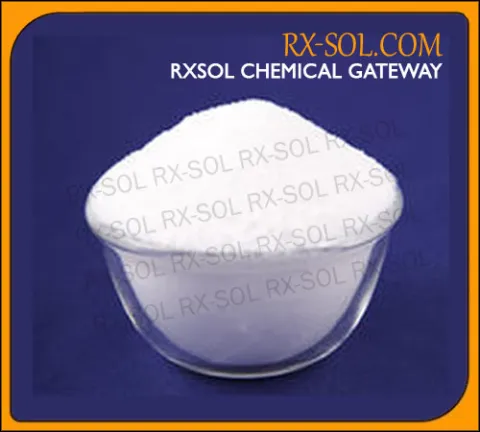
| Appearance | White powder |
| Odour | Odourless |
| Odour threshold | Not applicable |
| Melting point/freezing point | 851°C |
| Initial boiling point and boiling range | Not applicable >300°C (Melting point) |
| Flammability (solid, gas) | No data available |
| Upper/lower flammability or explosive limits | Not flammable |
| Flash Point | Not applicable (inorganic substance) |
| Autoignition temperature | Not applicable |
| Decomposition temperature | Not flammable |
| pH | >11 (saturated solution, study result, OECD 105) |
| Viscosity | Not relevant (solid) |
| Solubility(ies) | In water: 212.5 g/l @ 20°C (study result OECD 105) |
| Partition coefficient: n-octanol/water | Not applicable |
| Vapour pressure | Not applicable (inorganic substance, vapour pressure negligible) |
| Vapour density | Not applicable |
| Relative density | 2.52 @ 20°C (study result, EU Method A.3) |
| Particle characteristics | Not applicable |
| Explosive properties | Not explosive |
| Oxidizing properties | Not oxidising. |
| Other safety information | None known |
| Reactivity | Decomposes by reaction with strong acids. |
| Chemical stability | Stable under normal conditions |
| Possibility of hazardous reactions | None anticipated |
| Conditions to avoid | Avoid contact with acids. Exposure to moisture. |
| Incompatible materials | Finely divided aluminium |
| Hazardous decomposition products | Contact with acid will evolve CO2. |
| Acute Toxicity - Ingestio | Based upon the available data, the classification criteria are not met. |
| Acute Toxicity - Inhalation | Based upon the available data, the classification criteria are not met. |
| Acute Toxicity - Skin contact | Based upon the available data, the classification criteria are not met. |
| Skin corrosion/irritation | Based upon the available data, the classification criteria are not met. |
| Serious eye damage/irritation | Eye Irrit. 2; H319: Causes serious eye irritation. EU Harmonised Classification Irritating to eyes. (rabbit) (Rinehart, WE, 1978) |
| Respiratory or skin sensitisation | Based upon the available data, the classification criteria are not met |
| Germ cell mutagenicity | Based upon the available data, the classification criteria are not met |
| Carcinogenicity | Based upon the available data, the classification criteria are not met |
| Reproductive toxicity | Based upon the available data, the classification criteria are not met |
| STOT - single exposure | Based upon the available data, the classification criteria are not met |
| STOT - repeated exposure | Based upon the available data, the classification criteria are not met |
| Aspiration hazard | Based upon the available data, the classification criteria are not met |
| Assessment | None known. |
| Toxicity | Based upon the available data, the classification criteria are not met. Estimated LC50 (Substance): >100 mg/l. |
| Persistence and degradability | Not applicable for inorganic substances. |
| Bioaccumulative potential | Not applicable for inorganic substances. |
| Mobility in soil | Not applicable for inorganic substances. |
| Results of PBT and vPvB assessment | This substance/mixture contains no components considered to be either persistent, bioaccumulative and toxic (PBT), or very persistent and very bioaccumulative (vPvB) at levels of 0.1% or higher. |
| Assessment | According to Annex XIII of the REACH Regulation 1907/2006/EC inorganic substances do not need to be subjected to a PBT assessment. |
| Other adverse effects | None known. |
| Waste treatment methods | Dispose of contents in accordance with local, state or national legislation. Do not allow to enter drains, sewers or watercourses. Recycle packaging |
| Additional information | Avoid release to the environment. Dispose of empty containers and wastes safely. |
| UN number |
ADR/RID: - IMDG: - IATA: - |
| UN proper shipping name |
None assigned. None assigned. None assigned |
| Transport hazard class(es) |
None assigned. None assigned. None assigned |
| Packaging group |
None assigned. None assigned. None assigned |
| Environmental hazards |
Not classified Not classified as a Marine Pollutant. Not classified |
| Special precautions for user |
See Section: 2 |
| Transport in bulk according to Annex II of Marpol and the IBC Code |
No information available. No information available. No information available. |
| Safety, health and environmental | Regulations/legislation specific for the substance or mixture |
| National legislation | Germany Water hazard class (WGK): 1 TSCA Inventory Listed |
| Other regulations | Observe work restrictions regarding maternity protection in accordance to Dir 92/85/EEC or stricter national regulations where applicable.Take note of Dir 94/33/EC on the protection of young people at work. |
| Chemical Safety Assessment | A REACH chemical safety assessment has been carried out. |
| Other Information |
The information above is believed to be accurate and represents the best information currently available to us. However, we make no warranty of merchantability or any other warranty, express or implied, with respect to such information, and weassume no liability resulting from its use. Users should make their own investigations to determine the suitability of the information for their particular purposes. In no event shall be liable for any claims, losses, or damages of any third party or for lost profits or any special, indirect, incidental, consequential or exemplary damages, howsoever arising, even if Rx Marine International has been advised of the possibility of such damages.
DISCLAIMER OF LIABILITY :The information in this SDS was obtained from sources which we believe are reliable. However, the information is provided without any warranty, express or implied, regarding its correctness. The conditions or methods of handling, storage, use or disposal of the product are beyond our control and may be beyond our knowledge. For this and other reasons, we do not assume responsibility and expressly disclaim liability for loss, damage or expense arising out of or in any way connected with the handling, storage, use or disposal of the product. This MSDS was prepared and is to be used only for this product. If the product is used as a component in another product, this MSDS information may not be applicable.
|
| No Data Available |