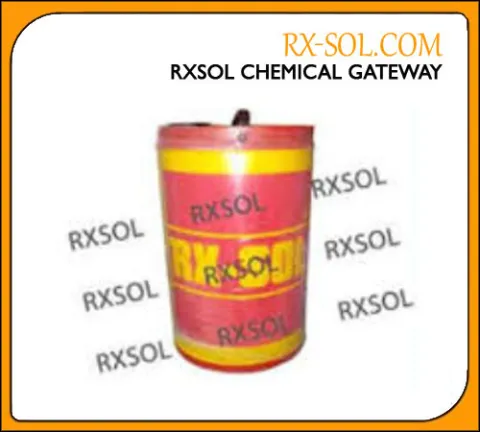
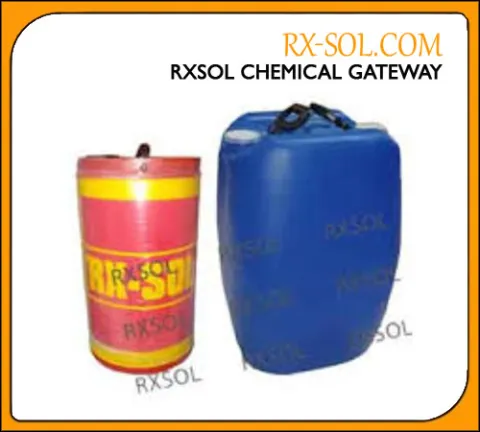
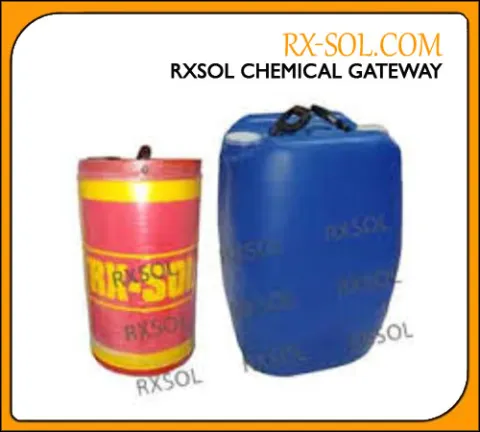
RXSOL Silica Sol 30%
- Part number
- RXSOL-19-1993-250
- Category
- Foundry Ind Chemicals
- Brand
- RXSOL
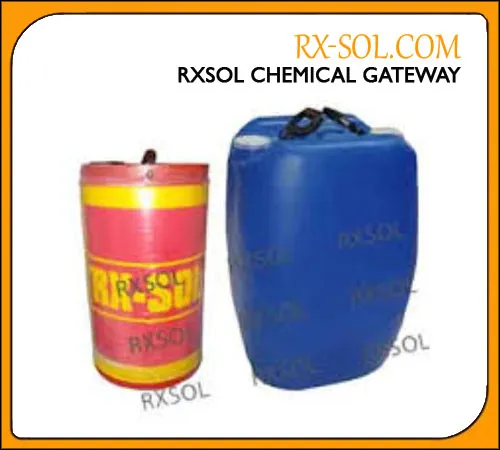
Overview
Silica Sol has many applications for paper, fibers, steel and catalysts. Most recently, it has been used by the semiconductor industry as a polishing agent for silicon wafers. Without the development of chemicals such as Silica Sol, the electronics industry would not be where it is today. Silica Sol comes in a variety of types to suit your needs
Technical specifications
| COLOR | Milky white ||| |
|---|---|
| FORM | Liquid ||| |
| ODOR | Odorless |
| SOLUBILITY IN WATER | ||| |
Completely |||
| SPECIFIC GRAVITY | ||| |
|---|
ASTM E-70
| VISCOSITY | ||| |
|---|
ASTM D-2983
| BOILING POINT | ||| |
|---|
ASTM D-86
| FLASH POINT | ||| |
|---|
Applications
Silica Sol has a wide variety of industrial applications such as: Frictionizing Adhesion and coating Binding and hardening Polishing Investment casting Impregnation filler Battery manufacturing Modification and strengthening of organic resins
Dosage and directions
Particles and Surface State
Silica Sol made by growing mono-dispersed, negatively charged, amorphous silica particles in water. OH ions exist at the surface of the particles with an electric double layer formed by alkali ions. Stabilization is achieved by the repulsion between the same negatively charged particles. Disturbance of the charge balance will cause the Silica Sol to aggregate, resulting in high viscosity or gelation of the solution.
Safety and SDS
Read the safety data sheet before handling. Wear suitable gloves and eye protection.
View safety data sheet
| Product Name | RXSOL-19-1993-250 |
| Product Type | Silica Sol RX 30% |
Company Details:
RX MARINE INTERNATIONAL
105, A wing , BSEL , TECH PARK.
VASHI ,NEW BOMBAY 400703 INDIA
| Phone | +91 22 65113333 / 5555 / 9999 |
| Fax | +91 22 2781 1318 :::AOH :0091 9821214367 |
| rxsolchemicals@gmail.com |
Our hazard evaluation has identified the following chemical ingredient (s) as hazardous under OSHA’s Hazard Communication Rule, 29 CFR 1910.1200. Consult Section XIV for the nature of the hazard (s).
| INGREDIENTS (s) | CAS # | APPROX.% |
| Amorphous silica | 7631-86-9 | 30-50 |
| Water | 7732-16-5 | 50-70 |
Ingredients are listed on the TSCA Inventory of Chemical Substances. Those not identified are nonhazardous.
EMERGENCY OVERVIEW:
CAUTION : May cause irritation with prolonged contact.
Do not get in eyes, on skin, on clothing. Do not take internally. Use with adequate ventilation. In case of contact with eyes, rinse immediately
with plenty of water and seek medical advice. After contact with skin, wash immediately with plenty of water. Protect product from freezing.
Wear suitable protective clothing.
Not flammable or combustible.
PRIMATRY ROUTES OF EXPOSURE: Eye, Skin
EYE CONTACT: May cause irritation with prolonged contact.
SKIN CONTACT: May cause irritation with prolonged contact.
INGESTION: Not a likely route of exposure. No adverse effects expected.
INHALATION: Not a likely route of exposure. Aerosols or product mist may irritate the upper respiratory tract.
SYMPTOMS OF EXPOSURE: Acute: A review of available data does not identify any symptoms from exposure not previously mentioned.
Chronic: A review of available data does not identify any symptoms form exposure not previously mentioned.
AGGRAVATION OF EXISTING CONDITIONS: Prolong inhalation of dust containing amorphous silica can increase lung injury in individual
with emphysema, asthma or other lung disorders.
HUMAN HEALTH HAZARDS – CHRONIC: Prolonged inhalation of dust containing amorphous silica can increase lung injury in individuals
with emphysema, asthma or other lung disorders.
EYE CONTACT: Flush affected area with water. If symptoms develop, seek medical advice.
SKIN CONTACT: Flush affected area with water. If symptoms develop, seek medical advice.
INGESTION: Do not induce vomiting without medical advice. If conscious, washout mouth and give water to drink. Get medical attention.
INHALATION: Remove to fresh air, treat symptomatically. If symptoms develop, seek medical advice.
NOTE TO PHYSICIAN: Based on the individual reactions of the patient, the physician’s judgment should be used to control symptoms and clinical
condition.
FLASH POINT: Not flammable
EXTINGUISHING MEDIA: Not expected to burn. Use extinguishing media appropriate for surrounding fire.
FIRE AND EXPLOSION HAZARD: Not flammable or combustible.
SPECIAL PROTECTIVE EQUIPMENT FOR FIRE FIGHTING: In case of fire, wear a full face positive-pressure self contained breathing apparatus and protective suit
PERSONAL PRECAUTIONS: Restrict access to areas of appropriate until clean-up operations are complete. Stop or reduce any leaks if it is safe to do so. Do not touch spilled material. Ventilate spill area if possible. Use personal protective equipment recommended in Section 8 (Exposure Controls / Person al Protection)
METHODS FOR CLEANING UP: SMALL SPILLS: Soak up spill with absorbent material. Place residues in a suitable, covered , properly labeled container. Wash affected area.
LARGE SPILLS: Contain liquid using absorbent material, by digging trenches or by diking. Reclaim into recovery or salvage drums or tank truck for proper disposal. Contact an approved waste hauler for disposal of contaminated recovered material. Dispose of material in compliance with regulations indicated in Section 13 (Disposal Considerations).
ENVIRONMENTAL PRECAUTIONS: Do not contaminate surface water.
HANDLING: Avoid eye and skin contact. Do not take internally. Use with adequate ventilation. Do not breathe vapors / gases / dust. Ensure all containers are labeled. Keep the containers closed when not in use.
STORAGE CONDITIONS: Protect product from freezing. Store the containers tightly closed.
Store in suitable labeled containers.
SUITABLE CONSTRUCTION MATERIAL: HDPE (high density polyethylene). Compatibility with Plastic Materials can vary; we therefore recommend that compatibility is tested prior to use.
OCCUPATIONAL EXPOSURE LIMITS: This product contains amorphous, colloidal or fumed silica. Should the product become dried or misted such that inhalation of the material is possible, standard hygiene practices should be utilized to ensure that exposure to respirable particles is within the regulated limits.
ACGIH / TLV Substances(s) Amorphous Silica TWA: 10 mg/m3
OSHA / PEL Substances(s) Amorphous Silica TWA: 6 mg/m3
ENGINEERING MEASURES: The use of local exhaust ventilation is recommended to control emissions near the source. Laboratory samples should be handled in a fumehood. Provide mechanical ventilation of confined spaces.
RESPIRATORY PROTECTION: Where concentrations in air may exceed the limits given in this section, the use of a half face filter mask or air supplied breathing apparatus is recommended. A suitable filter material depends on the amount and type of
chemicals being handled. Consider the use of filter type: Particulate filter – HEPA, with a Particulate pre-filter. In event of emergency or planned entry into unknown concentrations a positive pressure, full-facepiece SCBA should be used. If respiratory protection is required, institute a complete respiratory protection program including selection, fit testing, training, maintenance and inspection.
HAND PROTECTION: When handling this product, the use of chemical gloves is recommended. The choice of work glove depends on work conditions and what chemicals are handled, but we have positive experience under light handling conditions.
Using gloves made from , Neoprene, Nitrile, PVC. Gloves should be replaced immediately if signs of degradation are observed. Breakthrough time not determined as preparation, consult PPE manufacturers.
SKIN PROTECTION: Wear standard protective clothing.
EYE PROTECTION: Wear chemical splash goggles.
HYGIENE RECOMMENDATIONS: Use good work and personal hygiene practices to avoid exposure. Keep an eye wash fountain available. Keep a safety shower available. If clothing is contaminated, remove clothing and thoroughly wash the affected area.
Launder contaminated clothing before reuse. Always wash thoroughly after handling chemicals. When handling this product never eat, drink or smoke.
HUMAN EXPOSURE CHARACTERIZATION: Based on our recommended product application and personal protective equipment, the potential human exposure is: LOW
| Concentration | 30% | |
|
Na2o Content |
% 0.31 | |
| COLOR: Milky white | FORM: Liquid | ODOR: Odorless |
| SOLUBILITY IN WATER: | Completely | |
| SPECIFIC GRAVITY: | 1.21-1.40 @ 68°C | ASTM D-1298 |
| pH (NEAT) = | 9.8-10.2 | ASTM E-70 |
| VISCOSITY: | 25cps @ 77°F | ASTM D-2983 |
| BOILING POINT: | 100°C @ 760 mm Hg | ASTM D-86 |
| FLASH POINT: | None | |
| Particle Size | 12 nm | |
| Surface Area |
Sq.m/gm 315 |
STABILITY: Stable under normal conditions.
HAZARDOUS POLYMERIZATION: Hazardous polymerization will not occur.
CONDITIONS TO AVOID: Freezing temperatures.
MATERIALS TO AVOID: None known.
HAZARDOUS DECOMPOSITION PRODUCTS: Under fire conditions: None known.
The following results are for the product:
ACUTE ORAL TOXICITY: Rat, LD50 > 15,000 mg/kg, Non-Hazardous
PRIMARY SKIN IRRITATION: Draize Score 0.4 / 8.0, Minimally irritating
PRIMARY EYE IRRITAITON: Draize Score 3.3 / 110, Practically non-irritating
SENSITIZATION: This product is not expected to be a sensitizer.
CARCINOGENICITY: None of the substances in this product are listed as carcinogens by the International Agency for Research on Cancer (IARC), the National toxicology Program (NTP) or the American Conference of Governmental Industrial Hygienists (ACGIH).
HUMAN HAZARD CHARACTERIZTION: Based on our hazard characterization, the potential human
hazard is: LOW
ECOTOXICLOGICAL EFFECTS:
The following results are for the product.
ACUTE FISH RESULTS:
| Species | Exposure | LC50 | Test Descriptor |
| Bluegill Sunfish | 96 hrs | >1,000 mg/l | Product |
| Rainbow Trout | 96 hrs | >1,000 mg/l | Product |
MOBILITY:
The environmental fate was estimated using a level III fugacity model embedded in the EPI (estimation program interface) Suite TM, proved by the US EPA. The model assumes a steady state condition between the total input and output. The level III model does not require equilibrium between the defined media. The information provided is intended to give the user a general estimate of the environmental fate of this product under the designed conditions of the models. If released into the environment this material is expected to distribute to the air, water and soil / sediment in the approximate respective percentages:
| Air | Water | Soil / Sediment |
| <5% | 30-50% | 50-70% |
The portion in water is expected to be soluble or dispersible.
BIOACCUMULATION POTENTIAL: This preparation or material is not expected to bioaccumulate.
ENVIRONEMNTAL HAZARD AND EXPOSURE CHARACTERIZATION: Based on our hazard characterization, the potential environmental hazard is : LOW
Based on our recommended product application and the product’s characteristics, the potential environmental exposure is: LOW
If released into the environment, see CERCLA / SUPERFUND in Section 15.
If this product becomes a waste, it is not a hazardous waste as defined by the Resource Conservation and Recovery Act (RCRA) 40 CFR 261, since it does not have the characteristics of Subpart C, nor is it listed under Subpart D. As a non-hazardous waste, it is not subject to federal regulation. Consult state or local regulation for any additional handling, treatment or disposal requirements. For disposal, contact a properly licensed waste treatment, storage, disposal or recycling facility.
SHIPPING INFORMATION
LAND TRANSPORT: Not Regulated.
AIR TRANSPORT (ICAO / IATA): Not Regulated.
MARINE TRANSPORT (IMDG / IMO): Not Regulated.
The following regulations apply to this product.
FEDERAL REGULATIONS:
OSHA’S HAZARD COMMUNICATION RULE, 29 CFR 1910.1200:
Based on our hazard evaluation, the following ingredient in this product is hazardous and the reason is shown below.
Amorphous silica = TWA 10 mg/m3 (total dust) ACGIH/TLV
Amorphous silica = TWA 6 mg/m3 OSHA/PEL
CERCLA/SUPERFUND, 40 CFR 117, 302:
Notification of spills of this product is not required.
SARA/SUPERFUND AMENDMENTS AND REAUTHORIZATION ACT OF 1986
(TITLE III) - SECTIONS 302, 311, 312 AND 313:
SECTION 302 - EXTREMELY HAZARDOUS SUBSTANCES (40 CFR 355):
This product does not contain ingredients listed in Appendix A and B as an Extremely Hazardous Substance.
SECTIONS 311 and 312 - MATERIAL SAFETY DATA SHEET REQUIREMENTS (40 CFR 370):
Our hazard evaluation has found this product to be hazardous. The product should be reported under the following EPA hazard categories:
XX Immediate (acute) health hazard
XX Delayed (chronic) health hazard
-- Fire hazard
-- Sudden release of pressure hazard
-- Reactive hazard
Under SARA 311 and 312, the EPA has established threshold quantities for the reporting of hazardous chemicals. The current thresholds are: 500 pounds or the threshold planning quantity (TPQ), whichever is lower, for extremely hazardous substances and 10,000 pounds for all other hazardous chemicals.
SECTION 313 - LIST OF TOXIC CHEMICALS (40 CFR 372): This product does not contain ingredients on the List of Toxic Chemicals.
TOXIC SUBSTANCES CONTROL ACT (TSCA): The chemical ingredients in this product are on the 8(b) Inventory List (40 CFR 710).
RESOURCE CONSERVATION AND RECOVERY ACT (RCRA), 40 CRF 261 SUBPART C & D: Consult Section XI for RCRA classification.
FEDERAL WATER POLLUTION CONTROL ACT, CLEAN WATER ACT, 40 CFR 401.15 (formally Sec. 307), 40 CFR 116 (formerly Sec. 311): None of the ingredients are specifically listed.
CLEAN AIR ACT, Sec. 111 (40 CFR 60), Sec. 112 (40 CFR 61, 1990 Amendments), Sec. 611 (40 CFR 82, CLASS I and II Ozone depleting substances): This product does not contain ingredients covered by the Clean Air Act.
Additional Information
NA = NOT APPLICABLE
NE = NOT ESTABLISHED
Rx Marine International provides the information contained herein in good faith but makes no representation as to its comprehensiveness or accuracy. This document is intended only as a guide to the appropriate precautionary handling of the material by a properly trained person using this product. Individuals receiving the information must exercise their independent judgment in determining its appropriateness for a particular purpose.
| Concentration | 30% | |
|
Na2o Content |
% 0.31 | |
| COLOR: Milky white | FORM: Liquid | ODOR: Odorless |
| SOLUBILITY IN WATER: | Completely | |
| SPECIFIC GRAVITY: | 1.21-1.40 @ 68°C | ASTM D-1298 |
| pH (NEAT) = | 9.8-10.2 | ASTM E-70 |
| VISCOSITY: | 25cps @ 77°F | ASTM D-2983 |
| BOILING POINT: | 100°C @ 760 mm Hg | ASTM D-86 |
| FLASH POINT: | None | |
| Particle Size | 12 nm | |
| Surface Area |
Sq.m/gm 315 |
Availability
Silicasol manufacturer, Exporter and supplier in India, Turkey, Kenya, UAE Middle East, Oman, Canada